History of Stourhead
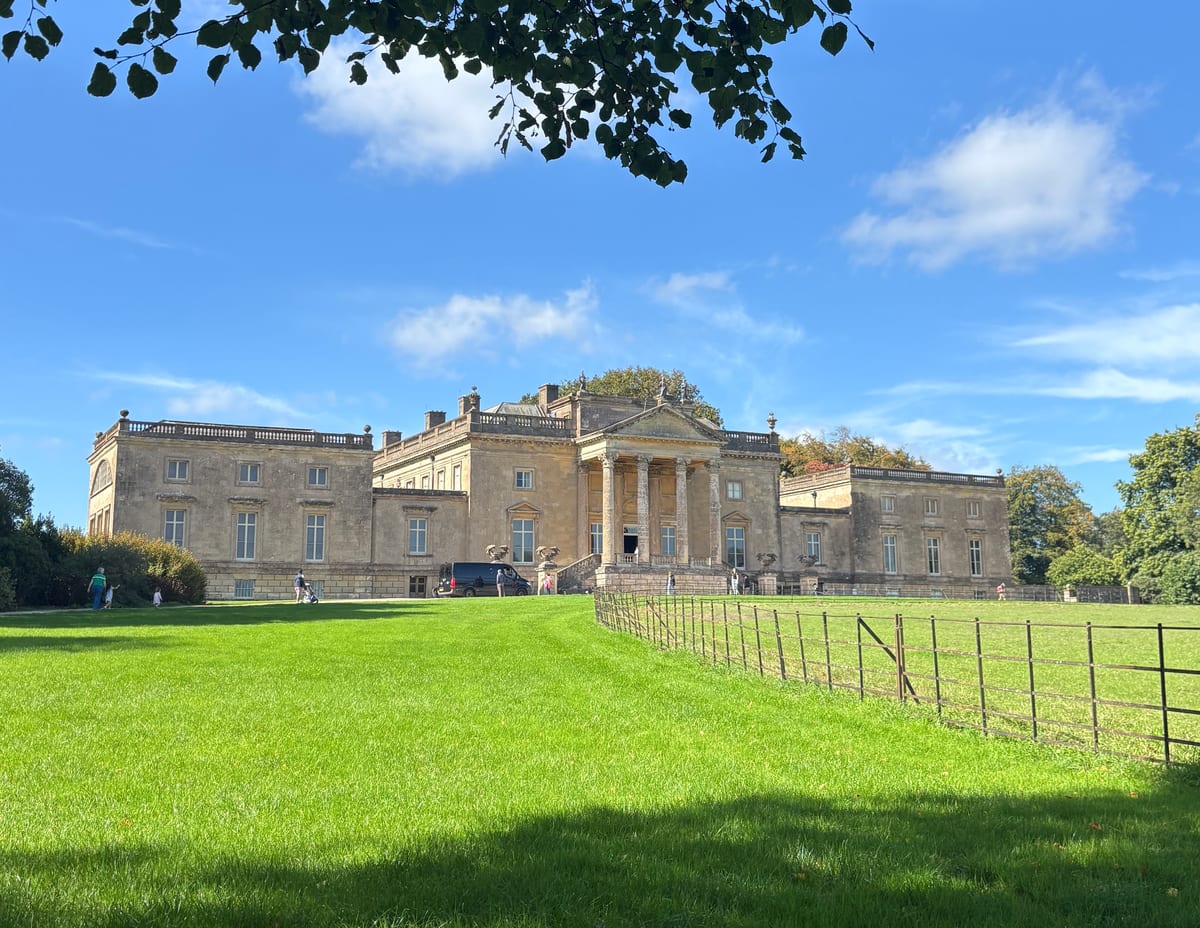
The land originally belonged to the Stourton family, who maintained their home above the Stour Valley for centuries. By the 1500s the family had lost significant power and influence, and during the English Civil War, the house was captured by Parliamentarians. Eventually, the Stourtons sold the property to the Meres Family, who held it for just three years. From there it was sold to Henry Hoare I, the son of a banker, Sir Richard Hoare. In a bold move, Henry ordered the house to be demolished and began building a new home, away from the original foundations.
Henry inherited the family bank in 1719, which saw success in investments in the slave trade. Despite his vision for the home, Henry died in 1724, leaving his wife and children to change the property. His son Henry Hoare II was dubbed Henry the Magnificent, and he had big plans for the estate.
Some of Henry II’s changes included redoing the gardens, installing the Grecco-Roman temples, adding the Palladian bridge and the Bristol Cross, as well as making other minor improvements. The house was also renovated in this period: to the interior, the addition of new gallery rooms, and to the exterior, a refronting of the house. These were some of the grandest changes or additions in the history of the property, often taking years to be implemented and in the end making Stourhead the unique and grand estate it is today.
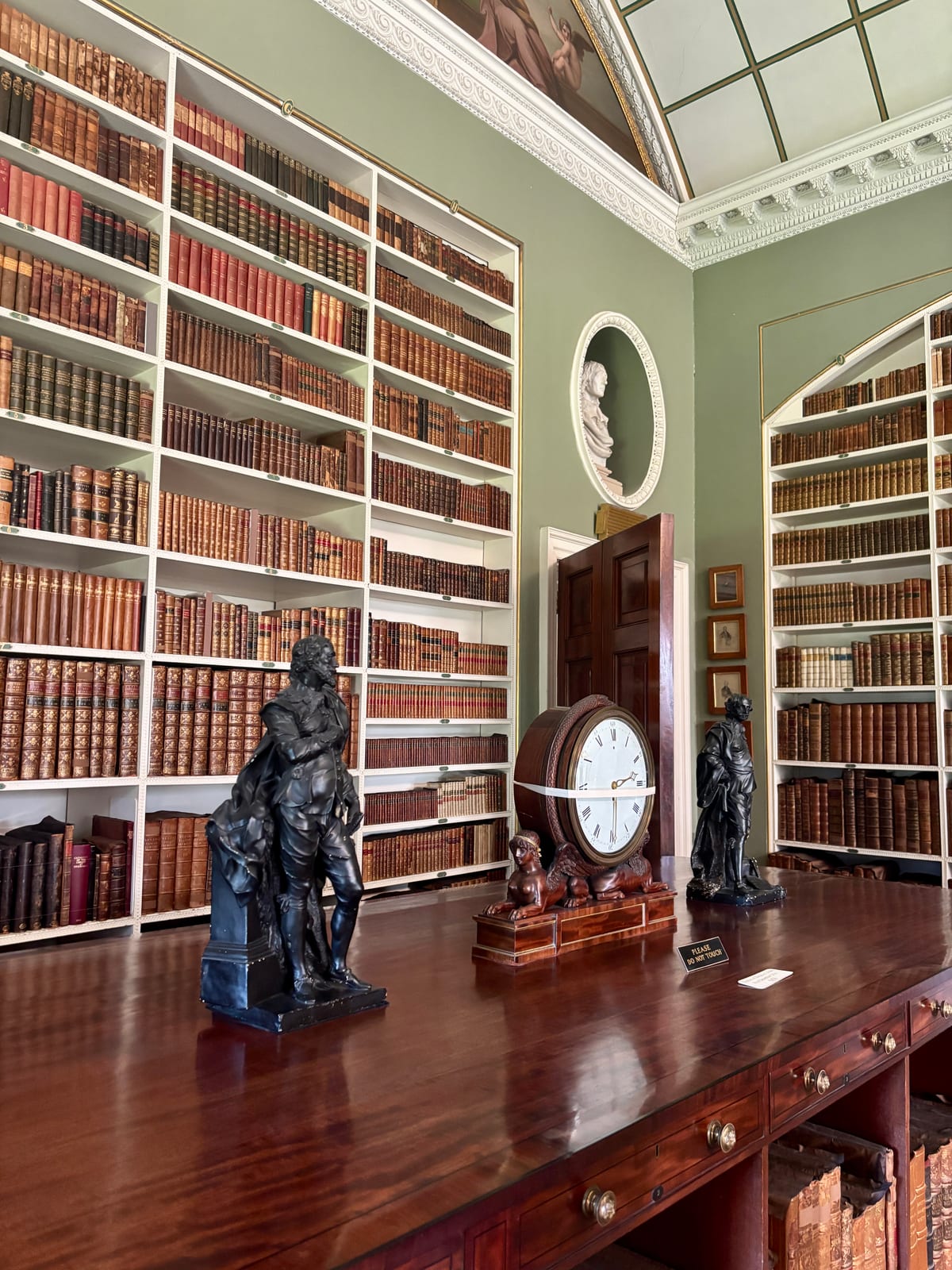
In 1783 the house passed on to Sir Richard Colt Hoare, Henry II’s grandson. Richard traveled Europe extensively following the death of his wife, bringing more art and artifacts to the estate when he returned. Alongside adding objects to the collection, he significantly changed the gardens by ordering the planting of over 90,000 trees, which was accomplished in just over a decade. He also removed some of Henry’s architecture, though he left the temples and a few other things in place, and built a boathouse. Most of his changes were additions rather than removals; Richard expanded the house, creating the two wings on either side, and adding one of the most significant rooms, the library.
After Richard’s death the estate passed on to his brother Sir Henry Hugh Hoare, from him to his son Sir Hugh Richard Hoare, and then to his nephew Sir Henry Ainslie Hoare. The family names were definitely preserved over the generations!
Sir Henry Ainslie Hoare held the house for nearly 40 years, but owing to debt and other issues, he began selling some of the house’s contents, including many of the paintings.
In 1894 the house passed to Sir Henry Hugh Arthur Hoare who worked with his wife to renovate the property and restore it to its former glory. Their efforts were hindered when the house burned in 1902, and they were forced to rebuild areas that had been damaged. In-line with their goals of restoration, they kept to the original blueprint and changed little as they rebuilt parts of the property.
In 1947 the couple died, and gave the estate to the National Trust, which has maintained it since then!
What to do and see at Stourhead
Tour Stourhead House
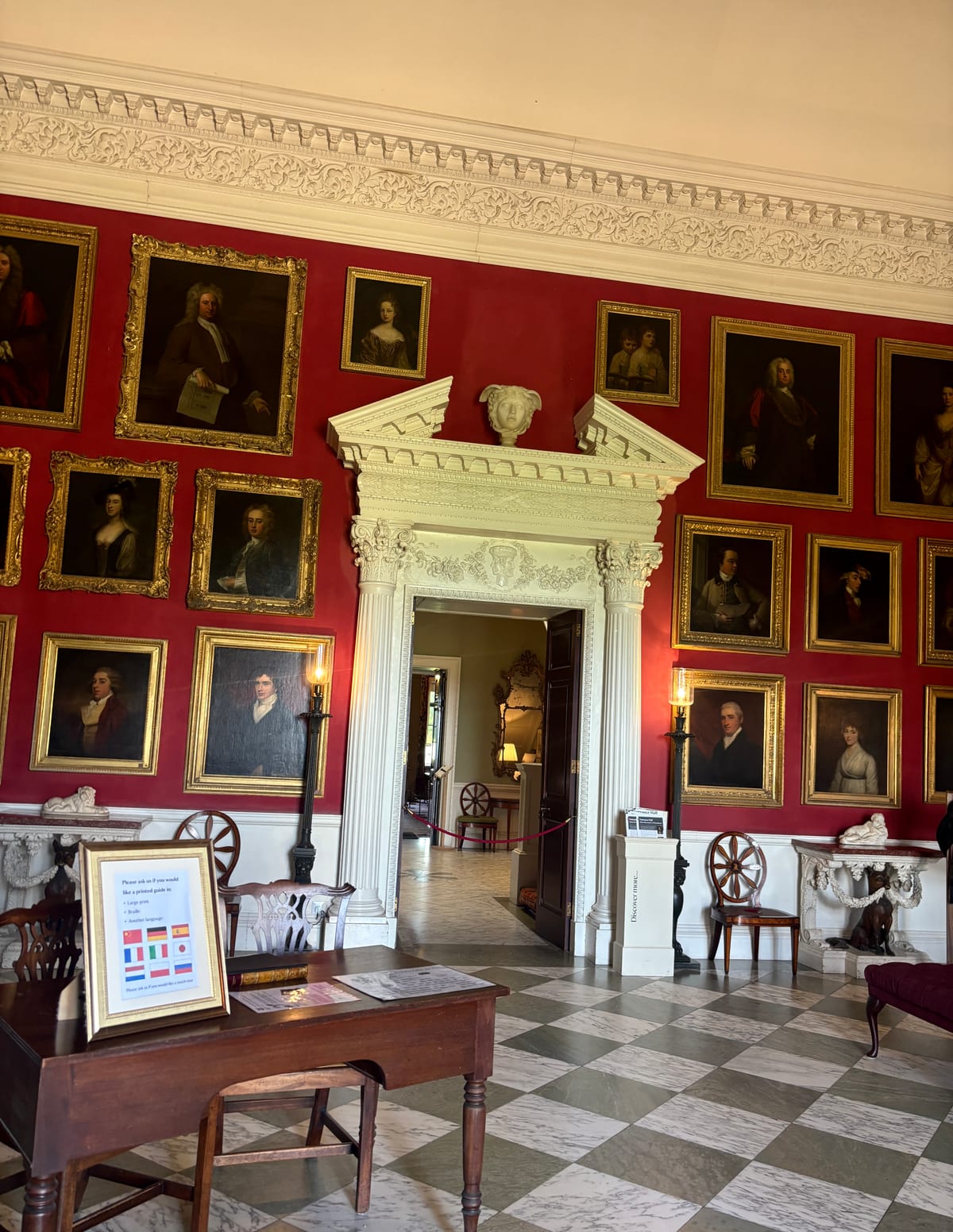
Stourhead House was built by British architect Colen Campbell and heavily altered through its years of different ownership. It is gorgeous and to reach it you must walk up a long drive, offering an excellent view of the front of the house. Inside the rooms are richly decorated, well maintained, and there is great variety, from the library to the picture gallery. It is hard to say if the house or the gardens are more beautiful. We recommend walking around the lake first, stopping for a coffee or snack, and then touring the house before completing your visit.
See the Collections
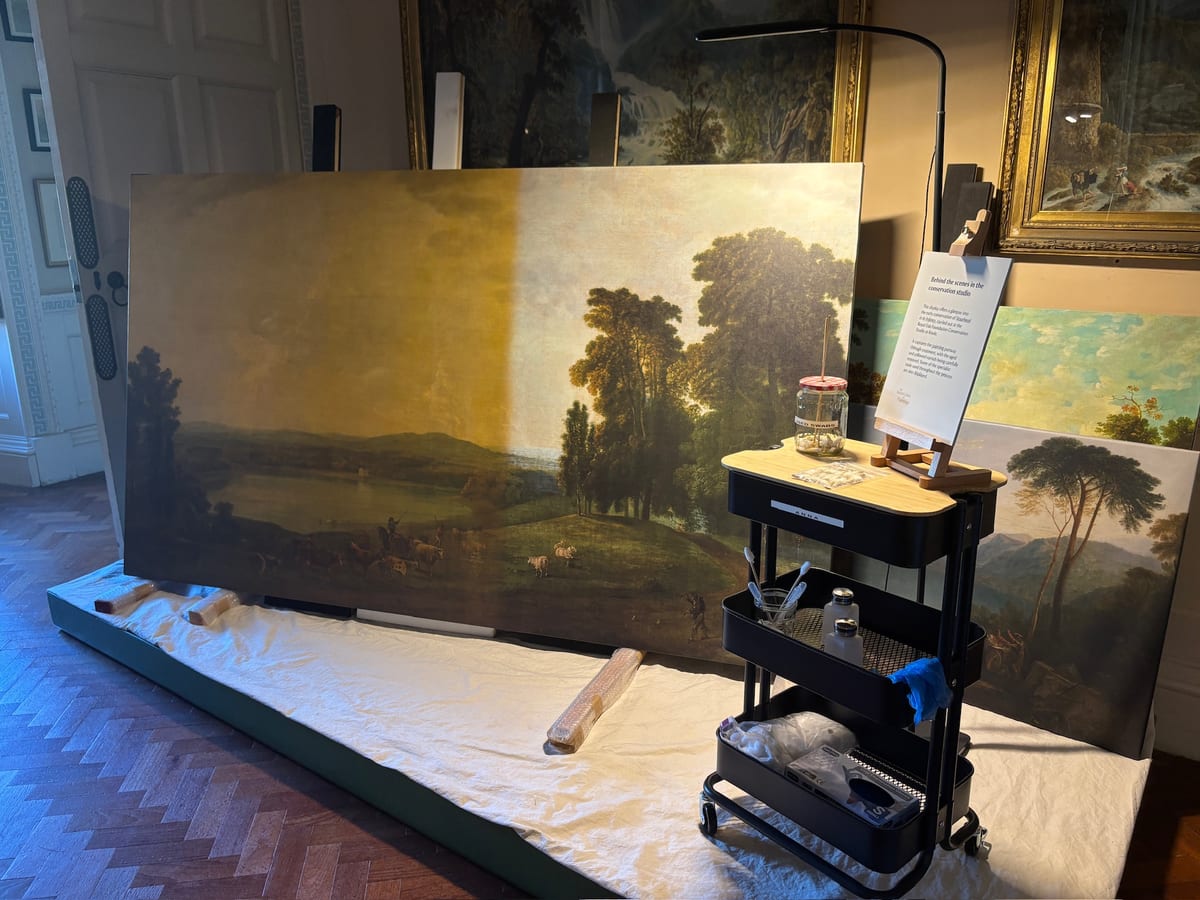
The house is filled with grand art brought in from all across Europe, intricate furniture designed by Thomas Chippendale the Younger, who lived and worked at Stourhead for some time, and unique objects. One such object is an ornate cabinet, made of precious gems. The Pope’s Cabinet is an exquisite piece brought to Stourhead by Henry the Magnificent. It is located in the Cabinet Room, and there are helpful cards as well as an info screen that explains some of the conservation work surrounding it. It was likely made for the Pope in the 1580s.
Wander the Landscape Garden
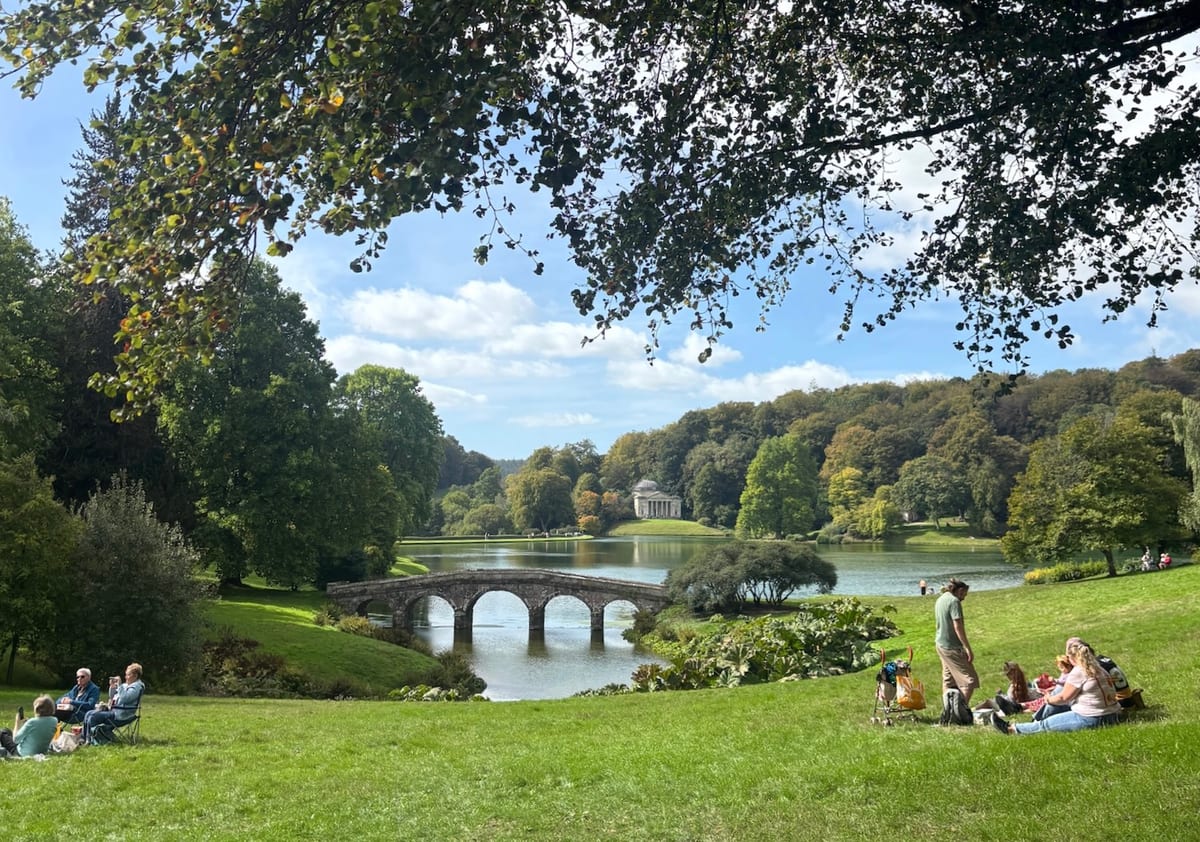
The Landscape Garden is situated around a large lake (artificially-made by the way!), with a looping path that meanders around the lake. Along the route there is lots to see, including a Roman inspired grotto, the famous Palladian bridge, temples, and ancient towering trees.
The walking path is 1.7 miles long. Some parts are paved, though others can be muddy. Wear comfortable and sensible shoes!
To note, the grotto is part of this loop but there are clear signs redirecting you around it should you choose to skip this part. We would recommend seeing it as it is a very neat visual, but if you have difficulty navigating stairs or slippery conditions it is easy to avoid.
The Bristol Cross
Named after the city it comes from, this monument was imported in 1765 and restored and installed in front of the entrance to the lake.
The Palladian Bridge
Stourhead is home to one of four Palladian bridges in the world. The bridges are named after a type of renaissance architectural style that was brought to the UK in the 18th century. The inspiration for this style was introduced to Britain by wealthy young men returning from European tours. These tours were taken to teach the young men about the various cultures, arts, and languages that would flaunt their influence and power. Frequently these men brought home artifacts, souvenirs, and ideas, including many works by Andrea Palladio (1508-1580), an author, artist, and architect from the Renaissance period. In the years after the introduction of his unique style, the popularity grew and several houses were built in the fashion. The primary elements of the style include symmetrical facings, similarities to temple entrances, and uniform sizing (both of the exterior and interior). Palladian Bridges were built in four places in the world, with three in England. This one was built in 1762.
The Stourhead Palladian Bridge is located on the nearside of the lake, making it one of the first visuals when you approach. It is visible from across the lake, so keep an eye out for it as you walk through the entire route. It is a gorgeous design and has been well kept.
Another famous example of a Palladian Bridge can be found at Wilton House in the neighbouring city of Salisbury. Read more on Wilton House below!
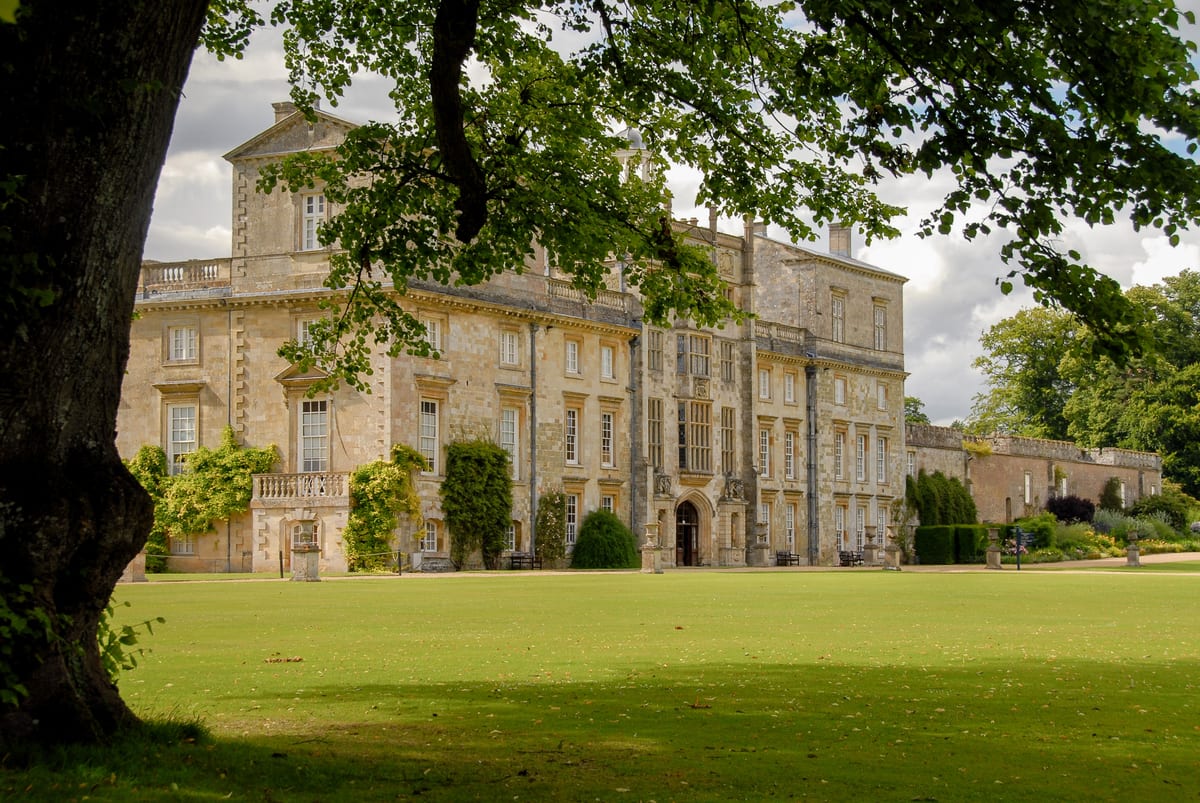
The Complete 2026 Guide to Wilton House
The 2026 Guide to Wilton House: its history, how to get there, the house and grounds, famous scenes filmed there, its car collection, and more.
The Roman Grotto
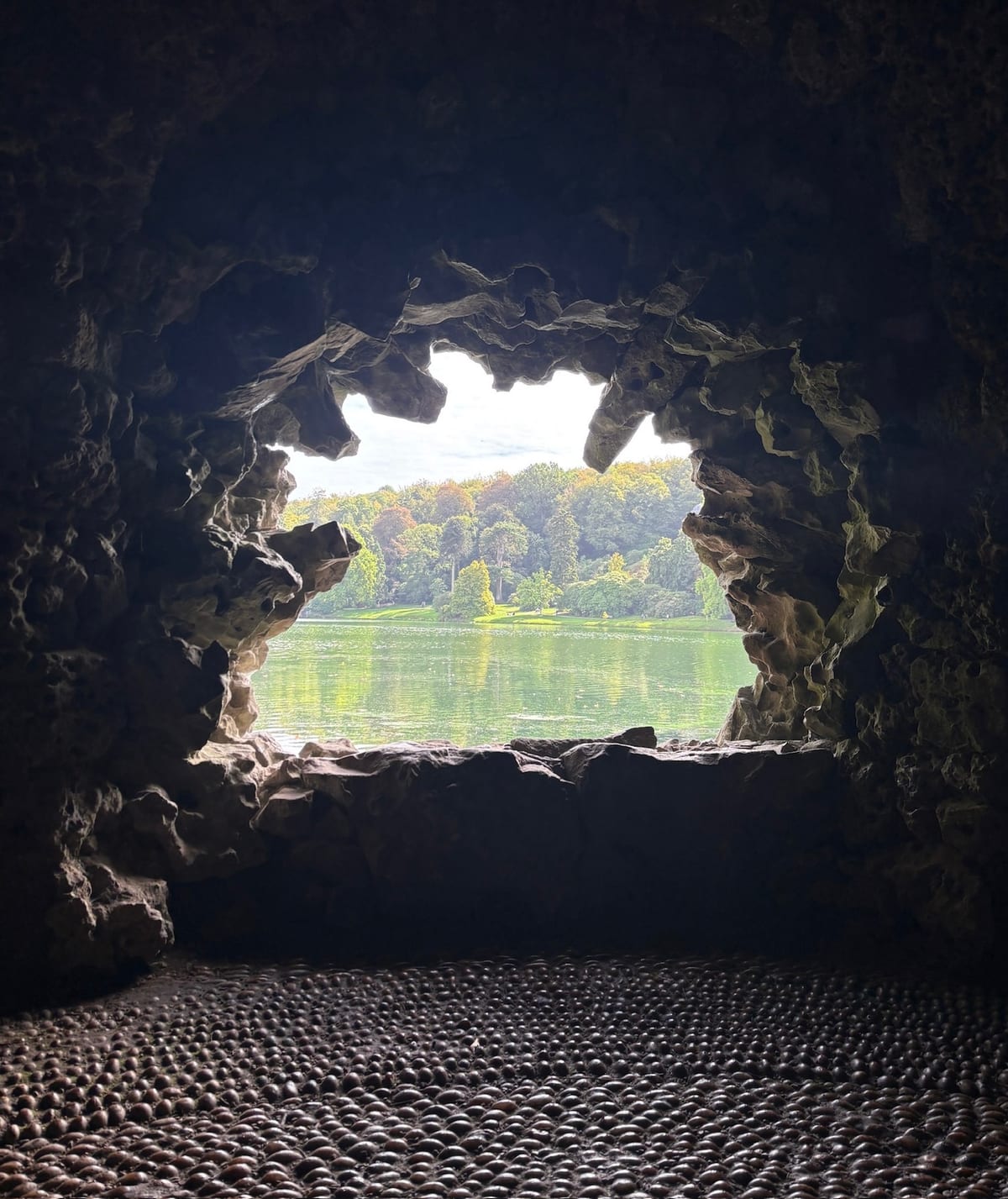
The grotto is a connection of two small caves, in this case both are artificial. In general, grottos have been used throughout history as sites for religious shrines, though they became popular in the Italian renaissance as shelters from the heat, and then in later years a kety part of British garden landscaping. The Stourhead grotto was built in 1748 for Henry Hoare by William Privet of Chilmark.
The water flowing the caves are from natural springs, and in line with the theme of the other sites, there are Greek Gods installed at the mouth of the fountains. One is a river god, while the other is Ariadne, who helped Theseus fight the Minotaur in ancient myth, and eventually married Dionysus, god of wine.
Aside from the construction of the grotto and its statues, there is also a fantastic view overlooking the lake while inside the grotto.
The Gothic Cottage
The Gothic Cottage is an additional building in the gardens, thought to be a potential servants residence or used as a lakeside retreat. It is small but picturesque, and visitors to the garden can step inside to see the simple interior.
Visit the Garden Temples
The garden temples are thought to be placed intentionally along the path in the garden so that the journey through it reflects Aeneas’s journey into the underworld. Whether visiting each site evokes the intended emotions and understandings in each visitor, they are without a doubt beautiful and awe-inspiring, and certainly worth the visit.
The Temple of Flora
The Temple of Flora was built in 1744 and took two years to be completed. It is dedicated to the Roman goddess of spring and flowers. This is the first temple you come to on the walk, though it is not usually open for visits inside.
The Pantheon
The Pantheon was built in 1753, and completed in 1754. The outside is styled after the Pantheon in Rome and is incredibly beautiful. Inside, the temple is lined with classical statues of different gods. There are cards giving information on when they were added, what they were made of, and in some instances how much it cost the Hoare family. The domed ceiling is also a fantastic and intricate design.
The Temple of Apollo
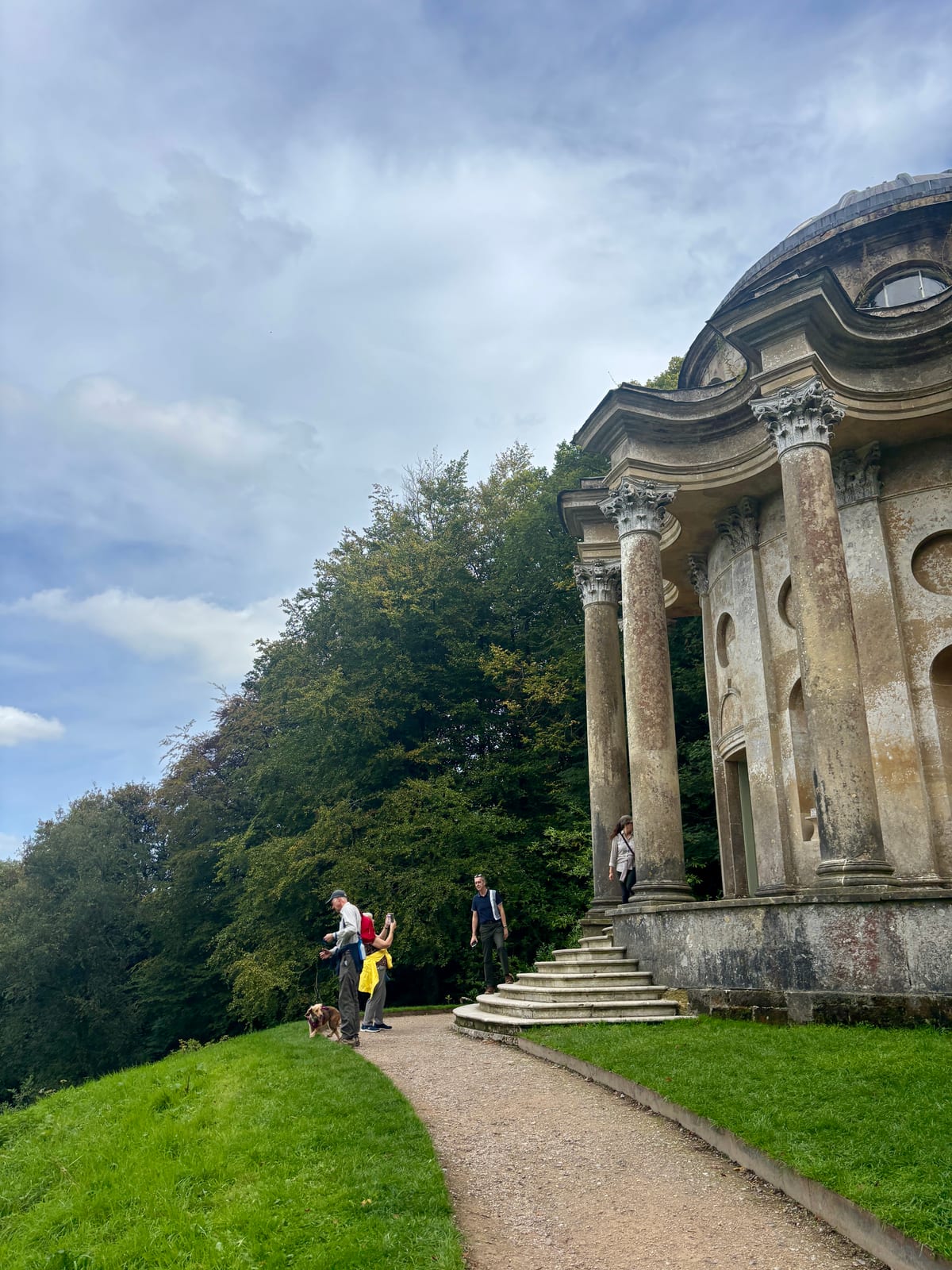
The Temple of Apollo was built in 1765, and dedicated to the Roman god of the sun. It is the final temple along the walk, and it is built high on a hill. This one is also open to visit inside. Many may recognise the exterior from Pride and Prejudice (2005) as it is where they filmed the scene in which Darcy proposes to Lizzie in the rain.
Climb up Alfred’s Tower
Henry the Magnificent installed Alfred's Tower on the estate in 1722, to celebrate King George III and the end of the Seven Years' War. It is open on select days to be climbed and has a unique and unexpected history (including being hit by a plane in 1944...). If you are interested in the tower it is worth checking out or reading up on!
Stourhead Opening Hours
The house is open each day of the week. Access to the house begins from 11:00, with all other facilities opening at 9:30. On most days the house closes first at 16:00, with the garden, shop, and restaurant staying open 30mins to an hour later. It is best to check the opening times directly on the National Trust visitor page linked here - there are some days the house will be completely closed!
Please note: Alfred’s Tower is only open during the summer on weekends and some bank holidays. You can still approach and see the outside, but when closed you cannot enter it.
How to get to Stourhead
By Train
The nearest train station to Stourhead is Gillingham (Dorset), not to be confused with Gillingham in Kent! This station sits on the London to Exeter line, and it is a direct train from London Waterloo station, taking just over 2 hours.
Gillingham (Dorset) is an approximately 15 minute car journey from Stourhead. Wiltshire offers a flexible bus that services Gillingham Train Station and Stourhead House. We recommend you download the Wiltshire Connect mobile app here, select the pick-up location as Gillingham Station Car Park and the destination as Stourhead, Car Park Shuttle Stop. This will cost £3 each way, or £2 for concession pricing.
You can also book a taxi to-and-from the station. This costs about £20 each way, and can be booked online with Ace Taxis Dorset - here.
By Bus
As mentioned before, buses can be booked from Gillingham (Dorset) Train Station via the Wiltshire Connect mobile app.
By Car
Navigate to the estate’s postcode of BA12 6QD. The nearest main road is the A303, and you should turn off onto the B3092 at Stourton and follow the signs to Stourhead National Trust.
Stourhead Car Park Information
Stourhead has a large and recently redone car park situated right near the entrance. There are payment machines along each aisle, though the site uses JustPark as well. Parking costs £4.50 for the day.
National Trust members park free (but don’t forget to register your parking on the app or at a machine!)
Stourhead Tickets
Stourhead is a National Trust site that grants free admission to members.
For all other visitors, Day Tickets grant access to the Landscape Garden and House. Tickets begin at £23 for adults and £11.50 for children. There are some group tickets available, including 1 adult + 2 children, 2 adults + up to 3 children, and adult groups. These are offered at a discounted rate. All tickets can be purchased in the visitor center right near the main entrance.
Free Access to the Wider Estate
Stourhead is a large estate (over 2600 acres if you can believe it!). Much of this estate has free and public footpaths, offering a no-cost option for a gorgeous day out. Enjoy the walking paths and picturesque nature, especially in the fall when the leaves begin to turn. The restaurant and shop are located before ticketing as well, so you can visit those without purchasing admission. There is the main Stourhead carpark, as well as a smaller carpark near Alfred’s Tower.
If you wish you can book a free guided walk with the National Trust Here.
What was Filmed at Stourhead?
Pride and Prejudice (2005)
Stourhead was the filming location of the 2005 version of Pride and Prejudice, starring Kiera Knightley and Matthew Macfadyen. Based on the novel by Jane Austen, this version of the film is one of many adaptations.
Stourhead was used as a filming site primarily for its garden. The landscape gardens were used to portray part of Rosings Park, the estate of Lady Catharine de Bourgh. The Temple of Apollo was used for one of the most iconic scenes of the film, when Darcy proposes to Lizzie in the pouring rain. According to a National Trust volunteer on site the day we visited, the Temple of Apollo is a popular place for proposals.
The Palladian Bridge is also featured in a brief scene when Lizzie runs across it.
The Pursuit of Love (2021)
Some of the rooms inside Stourhead House were used for the filming of The Pursuit of Love, a BBC drama.