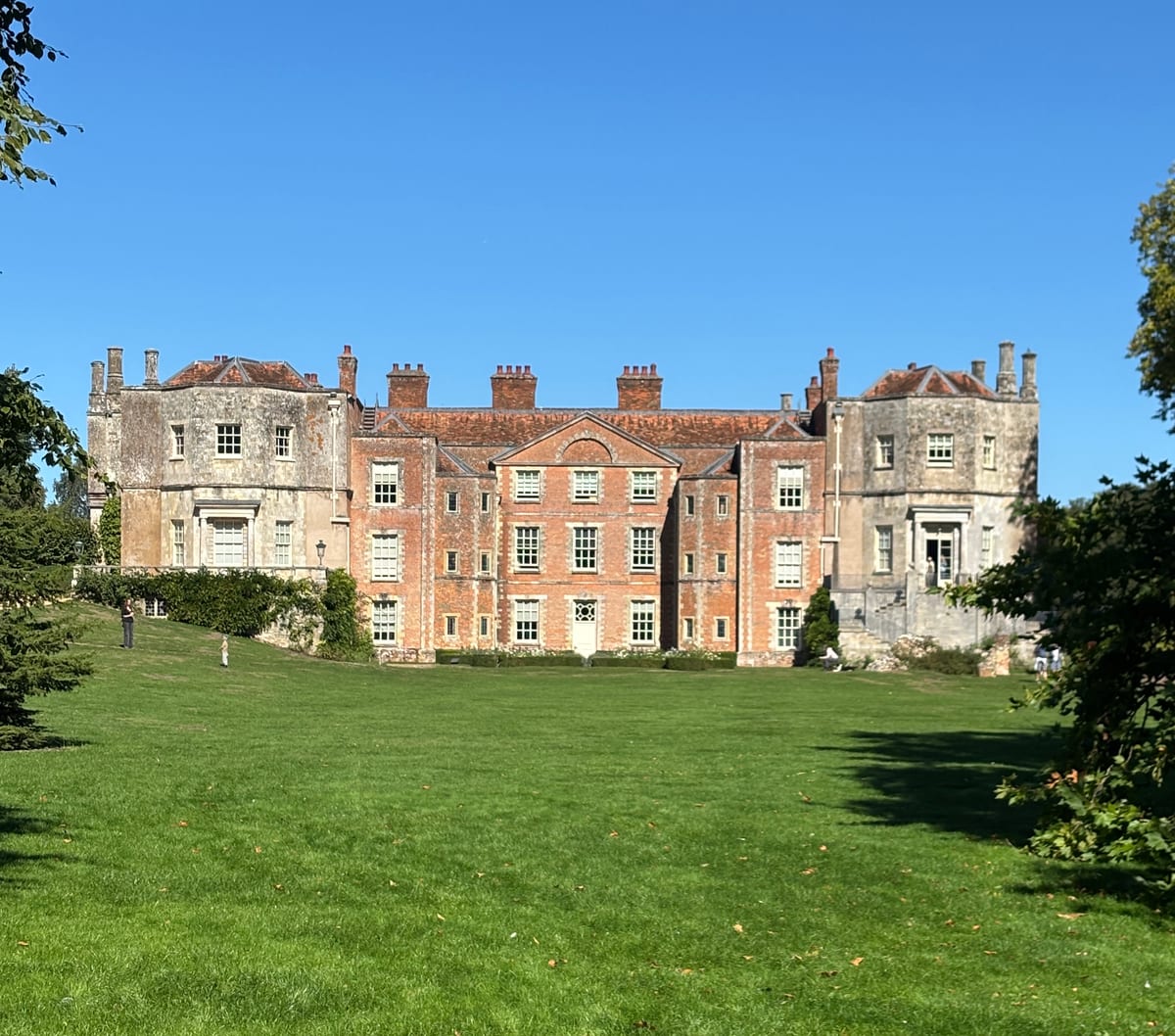
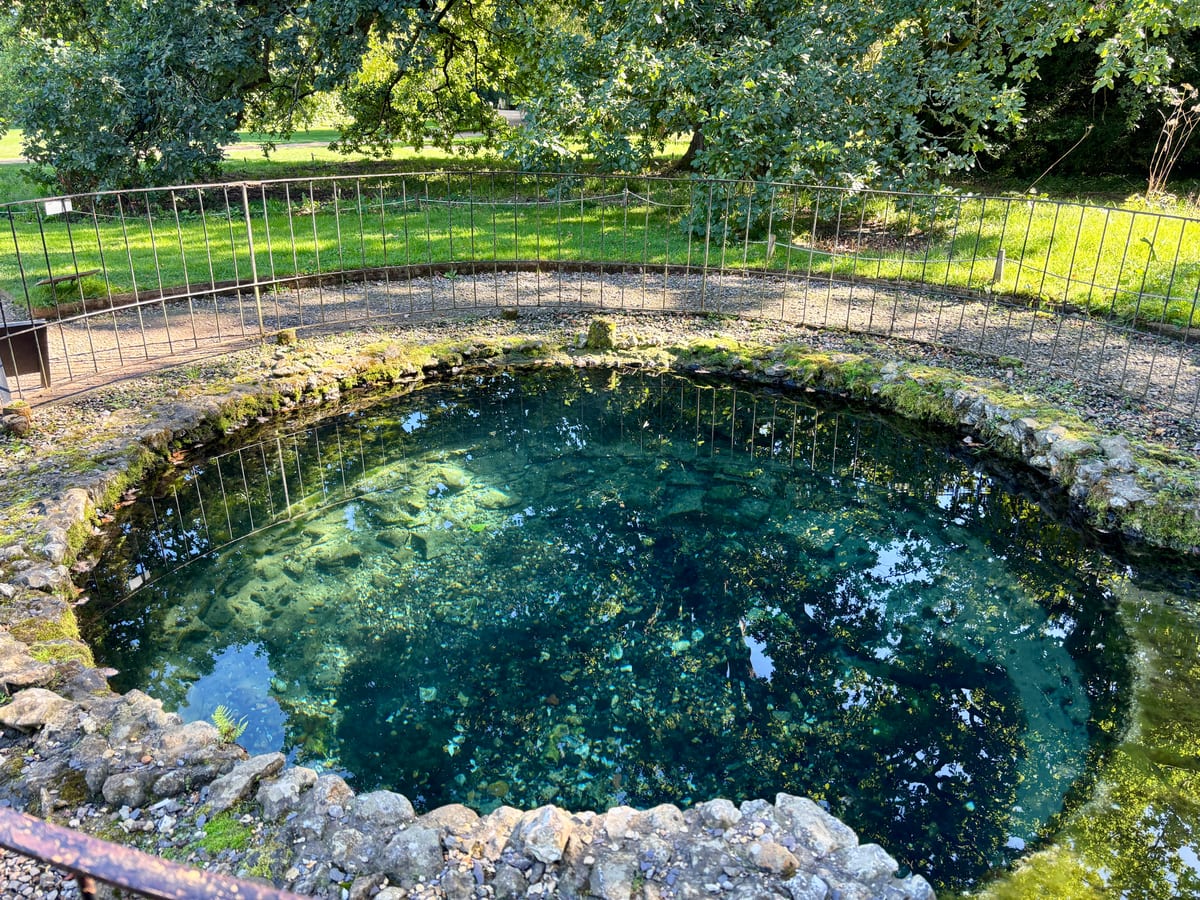
Mottisfont is a gorgeous manor house located in Hampshire, UK. It is set in a beautiful wooded area and visitors can listen to the gentle bubbling of the River Test running through the property. The house is a former priory, with the name coming from the Old English word ‘Moot’ which referred to a meeting place, and ‘font’ which refers to the natural water spring on the estate. After 335 years as a priory, Henry VIII dissolved it and gave the estate to Sir William Sandys, who decided to convert the building into a private residence. The house remained under private ownership and was maintained and renovated by families until 1957, when it was given to the National Trust by Maud Russell. She continued to live in it until she moved out in 1972. Today, the National Trust continues to maintain it and it is open to the public. There is beautiful scenery to behold, tours of the house, and two options for cafés, creating the perfect setting for a day out.
What to do at Mottisfont
Tour the House
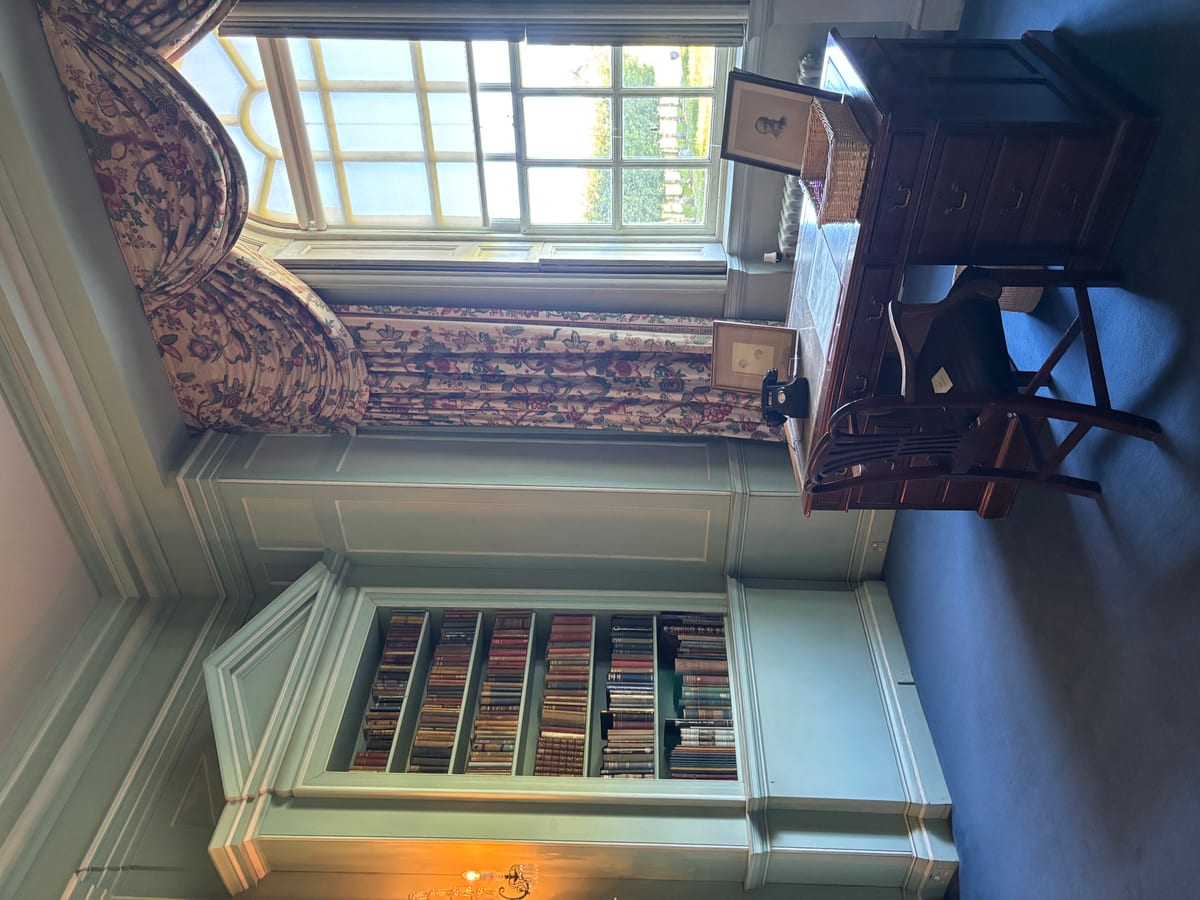
Access to the house is permitted via a self-guided tour. A National Trust volunteer greets visitors at the door, and there are pamphlets to take on the tour that give information on each room. There are additional details located on plaques in each room, as well as volunteers here and there to answer questions. The tour begins on the ground floor, in the main entrance. Some of the notable rooms are the study, the White Bedroom, and the Whistler Room (named after its artist, Rex Whistler). There is a terrifying surprise hiding in the bathroom on the first floor… (hint: it can also be found in the zoo).
2026 Exhibition
Found on the top floor of the house, the main exhibition in 2026 is ‘The Art & Craft of Print’ exhibition, running until 1st November.
This project is showcasing nearly 30 modern printmakers across England and a collection of impactful 20th-century works. Alongside displaying these prints, the exhibition also presents the techniques used in printmaking, and the impact it has had on interior design.
Entry to this exhibition is included as part of a standard Mottisfont admission ticket.
Wander the Gardens
The Mottisfont estate has some magnificent nature. The River Test runs through the estate, with multiple streams lined with walking paths. There are well maintained grass areas, carefully protected trees, and great views through the entire property. The gardens are partially maintained by volunteers, something to appreciate as you walk through the estate.
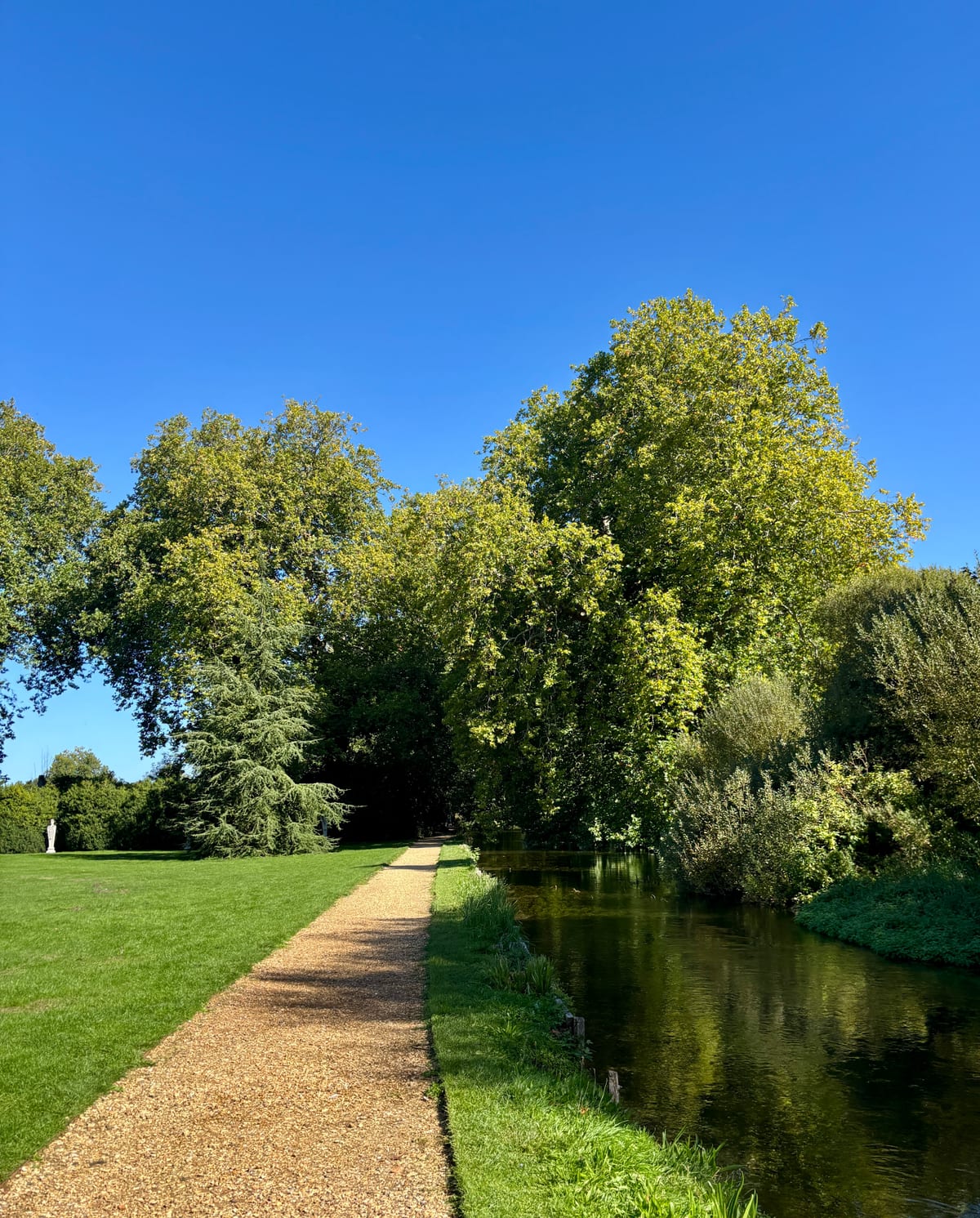
Wildlife is common, from crowds of ducks to swans gliding up and down the river (hoping for food no doubt), to varieties of fish resting gently. The water is very clear and beautiful and even a short walk along it brings great wonder.
There are historic trees, including what is thought to be the largest London Plane tree in England.
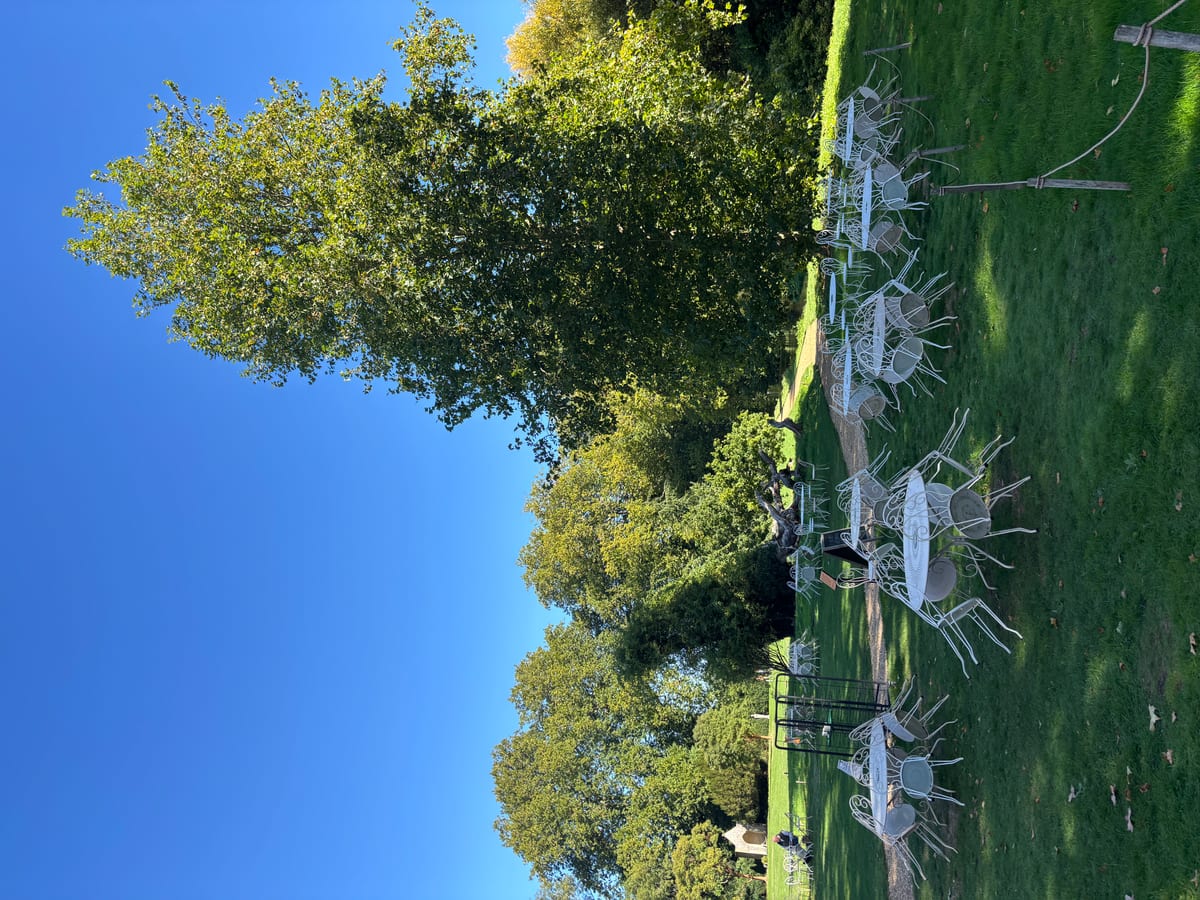
Picnic tables are spaced out throughout the gardens, so if you would rather eat in the gardens instead of the cafés, there are an abundance of options. We ate our lunch at a table near the river and it was a wonderful atmosphere. The site welcomes picnics on the grass as well, so feel free to bring your own blanket and sit wherever you'd like!
There are several free guided tours of the garden each day. They are led by informed volunteers and typically last around 20 minutes. There is a board near the entrance to the estate listing the tours of the day, but you can also speak to reception when purchasing your ticket if you are interested.
The Rose Gardens
Mottisfont is famous for its rose gardens. They are located in a walled section of the garden and filled with over 1500 rose plants. They are a particular variety, one that blooms only once each year. During the blooming season the walled garden comes alive with beautiful colors and is filled with exceptional visuals. Due to increased interest at this time the garden hours are extended. When planing your trip please note that weekdays and evenings tend to be less busy during this season. The carpark can fill up, so it is advised to carpool or use public transport. Plan your visit in advance and be prepared for both beauty and busyness.
When to See the Roses at Mottisfont
The peak of the rose season occurs in the final half of May and the first half of June. In the roughly 30 day period the flowers are at their best and in full bloom. The National Trust identifies the dates of the blooming season each year, this can be found on their website.
Adapting Horticulture to the Climate
The National Trust works hard to protect the historic nature of the site and the plants growing in the gardens. If you are curious about some of their recent work and adaptations, there is an interesting article linked here.
Where to eat at Mottisfont
Mottisfont offers two places to eat on the estate, the Old Kitchen Café and the Stable House Café.
The Old Kitchen Café
Serving drinks and cakes as well as hot food from 12:00 to 14:30, this café is accessible from both the east side of the house and through the Cellarium. There is outdoor seating available.
The Stable House Café
Situated in the old stable block, the café is open from 10:00 to 16:45. It serves drinks, cakes, ice creams, and sandwiches.
How long should I spend at Mottisfont?
Mottisfont is great for whatever you desire; bring your dogs and simply spend the morning walking the estate, zip through the house on your own personally led tour, or spend the whole day exploring all the nooks and crannies. We recommend blocking out a full day to enjoy Mottisfont, but it can all be done at your own pace. For us, bringing a picnic lunch and enjoying that after wandering the gardens was the perfect morning. We spent the afternoon exploring the house and then enjoyed a hot drink from the café. All in all, we spent about six hours at the estate, but could have stayed longer relaxing in the gardens.
How to get to Mottisfont
By Train
The nearest train station to Mottisfont is the Mottisfont and Dunbridge Station. This station is not on a major line, so accessing it from London or other primary locations requires a change at either Southampton Central or Salisbury. Tickets can be booked on the South Western Railway website, found here.
The station is about a mile from the estate, and the walk to-and-from the station is on a public right-of-way across fields and country roads.
If you’d rather not walk, you’ll need to book a taxi in advance as there is no taxi rank at the station. This will cost approximately £20 each way, and can be booked with local taxi company viaUNO.
By Car
Mottisfont’s postcode is SO51 0LP. If you’re coming from the M27 you should exit from Junction 2 or 3. If you’re coming from the M3, you should take Junction 8. As you get nearer, you will drive through country roads until you see the brown National Trust signs.
Tickets / Admission
Mottisfont admission is free to National Trust members, however paid tickets are broken down into three tiers. Discounted group pricing is available under all tiers, and more information can be found on the National Trust website, linked here.
Peak Admission
- Adult: £24.00
- Child: £12.00
- 10am - 5pm on:
- Bank Holidays
- Easter - (28 March - 12 April)
- Rose Season - (18 May - 17 June)
- Summer - (23 July - 1 August)
- Christmas
Standard Admission
- Adult: £18.00
- Child: £9.00
- 10am - 3pm daily, except:
- Bank Holidays
- Easter - (28 March - 12 April)
- Rose Season - (18 May - 17 June)
Off-Peak Admission
- Adult: £15.00
- Child: £7.50
- After 3pm daily, except:
- Rose Season - (18 May - 17 June) (Off-Peak applicable after 17:00 Thursday, Friday, Saturday)
The History of Mottisfont
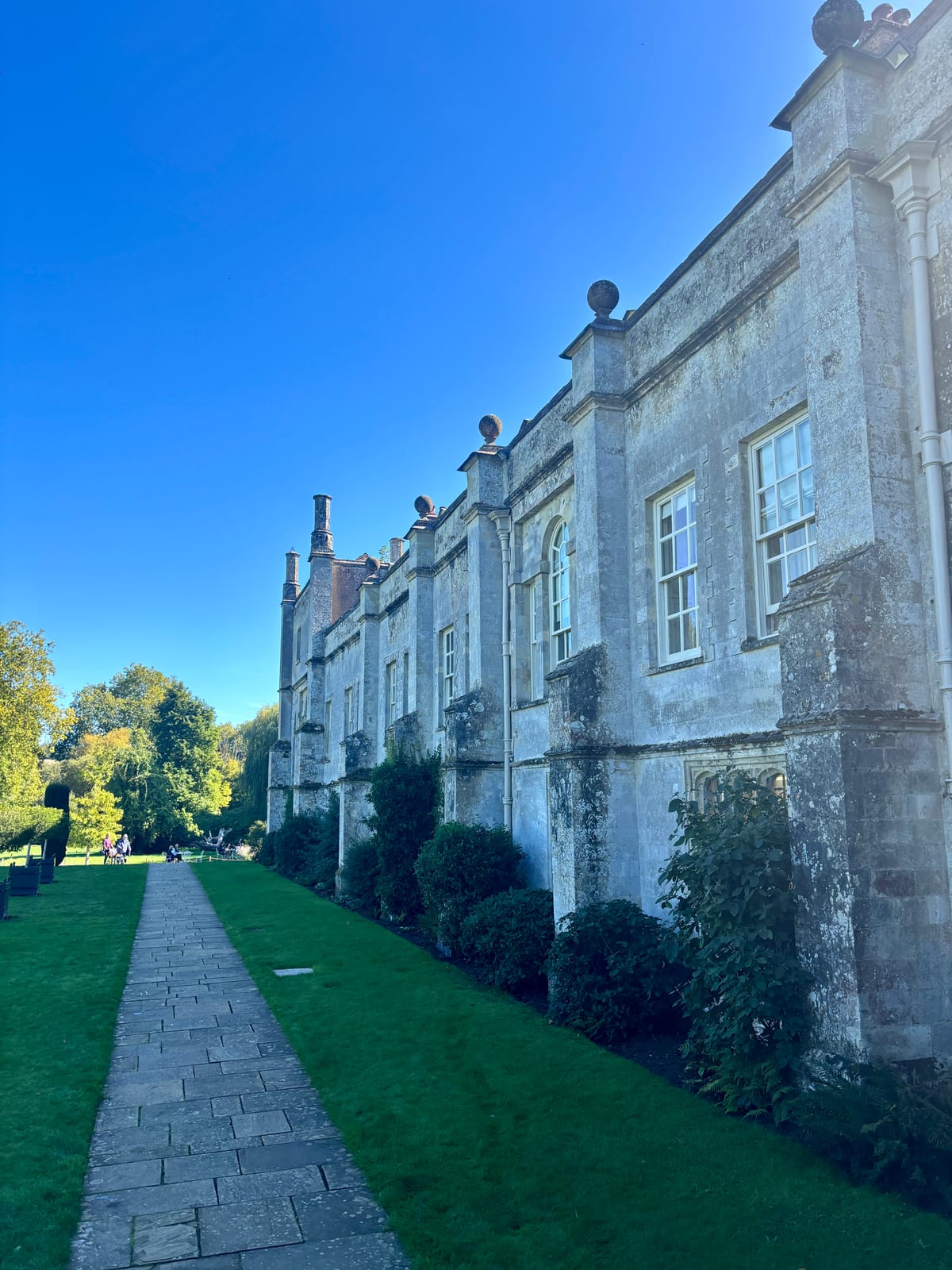
William Briwere founded the original priory in 1201. It was sanctified by a historic relic, the finger of St. John the Baptist. The priory was a key destination for pilgrimages and saw some success, though it fell into decline during the Black Death, and eventually was dissolved by Henry VIII in 1536 during the Dissolution of the Monasteries. He gifted the property to Sir William Sandys (although he had to trade land in Chelsea and Paddington for it), who served as the Lord Chamberlain in the 1530s. Sandys made the priory his new country home and added wings onto the existing structure and renovated the interiors. He died before seeing the changes finished, and for the next century his family used the property as a countryside residence. His changes were well received, and in this time the house hosted royal visits.
In 1684 the last Baron Sandys died with no heir, and the house passed to a new family, the Mills (distant cousins). They made some minor additions to the garden, but in this period changes to the estate are less notable.
In 1835, the house passed to a cousin, Reverend John Barker, who took up the Mill family name and spent much of his inherited money on updating the house. It was at this time that the stables were built and some of the medieval infrastructure was uncovered.
Marianne Vaudrey Barker-Mill inherited the house next, another cousin to receive the property. She never lived in the house but rented it out for just £320 a year. She made some changes, including moving all the bedrooms to the first floor and updating the bathrooms. In a rather odd decision, she banned the installation of electricity and central heating. Despite these seemingly poor conditions, the property was rented by the Meinertzhagen family, who lived there with their ten children. After a long tenancy, the family relocated after the death of one of the children.
From here, the house passed to the Russells, a successful banking family who bought the property in 1934. Maud Russell became the most famous name attached to the property, known as a patron of the arts and for her influence and changes to the house. There are a few key changes, as well as notable uses of the house during this ownership:
- Rex Whistler, an artist and friend of Maud's, was hired to update the art in some of the rooms. He made a big impact on the now called ‘Whistler Room’, where he designed the appearance of gothic architecture through paint. This is known as a trompe-l'œil painting, and gives a nod to the history of the house. He tragically died on his first day of service in WWII.
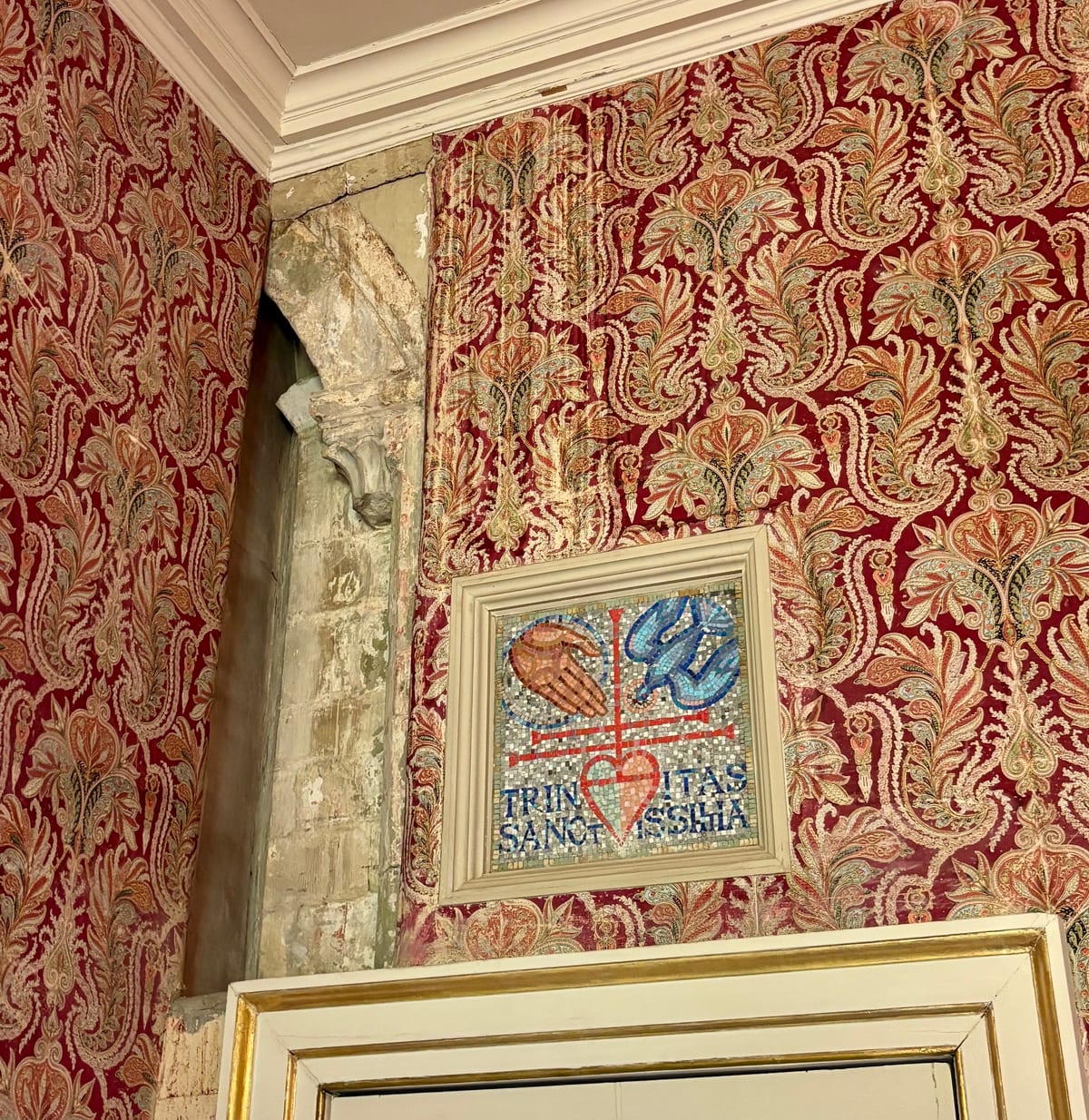
- Maud’s second marriage was to an artist Boris Anrep, who created mosaics around the property. One of these is located on the exterior, partially hidden by a wisteria. The depiction is of Maud as an Archangel.
- In addition to years of hosting artists, politicians, celebrities, and many friends, the house was put to official use. During the second world war the house was used as a hospital, with beds placed in the Long Gallery. Maud Russell herself contributed to the war effort by working on intelligence translations, being of German-Jewish descent. She also worked to help Jewish families escape persecution.
In 1957 Russell gave the property to the National Trust. She lived there until 1972.
It wasn’t until after the property was vacant that the National Trust decided to use the walled garden to plant the many roses that make the estate so famous today.
Filming at Mottisfont
Dracula
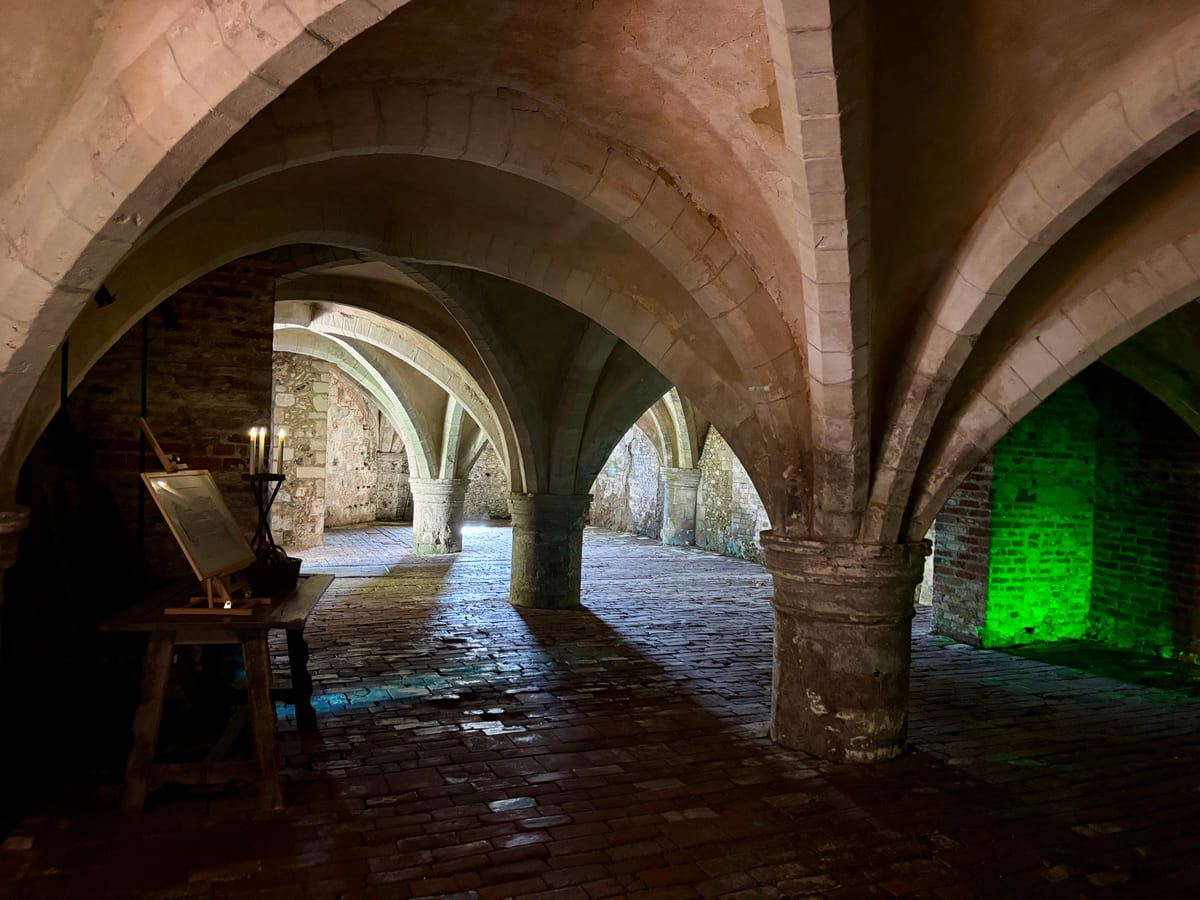
The most notable filming project at Mottisfont was the three-part BBC rendition of Dracula, released in 2020. The filming lasted two weeks, and took place in the Cellarium. This is the most complete part of the original medieval Augustinian Priory, and served as Sister Agatha’s workshop in the show.
The estate has also featured in BBC’s Escape to the Country (2013) and BBC’s Countryfile (2026).