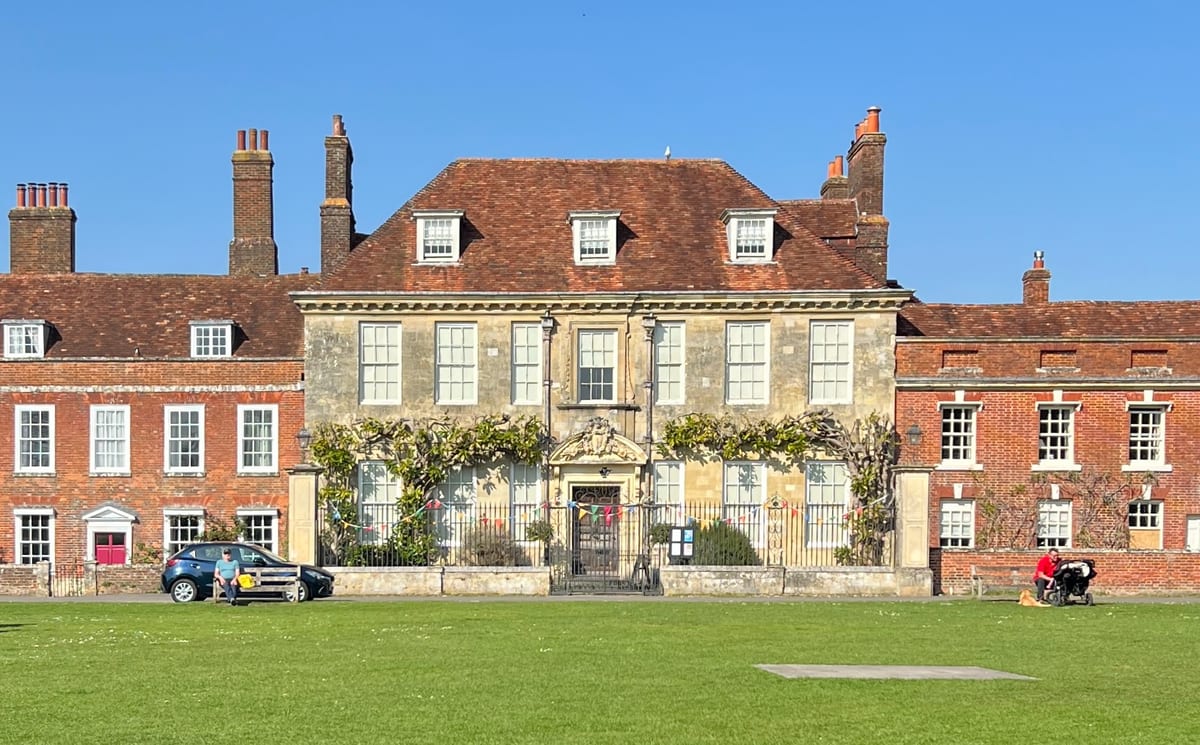
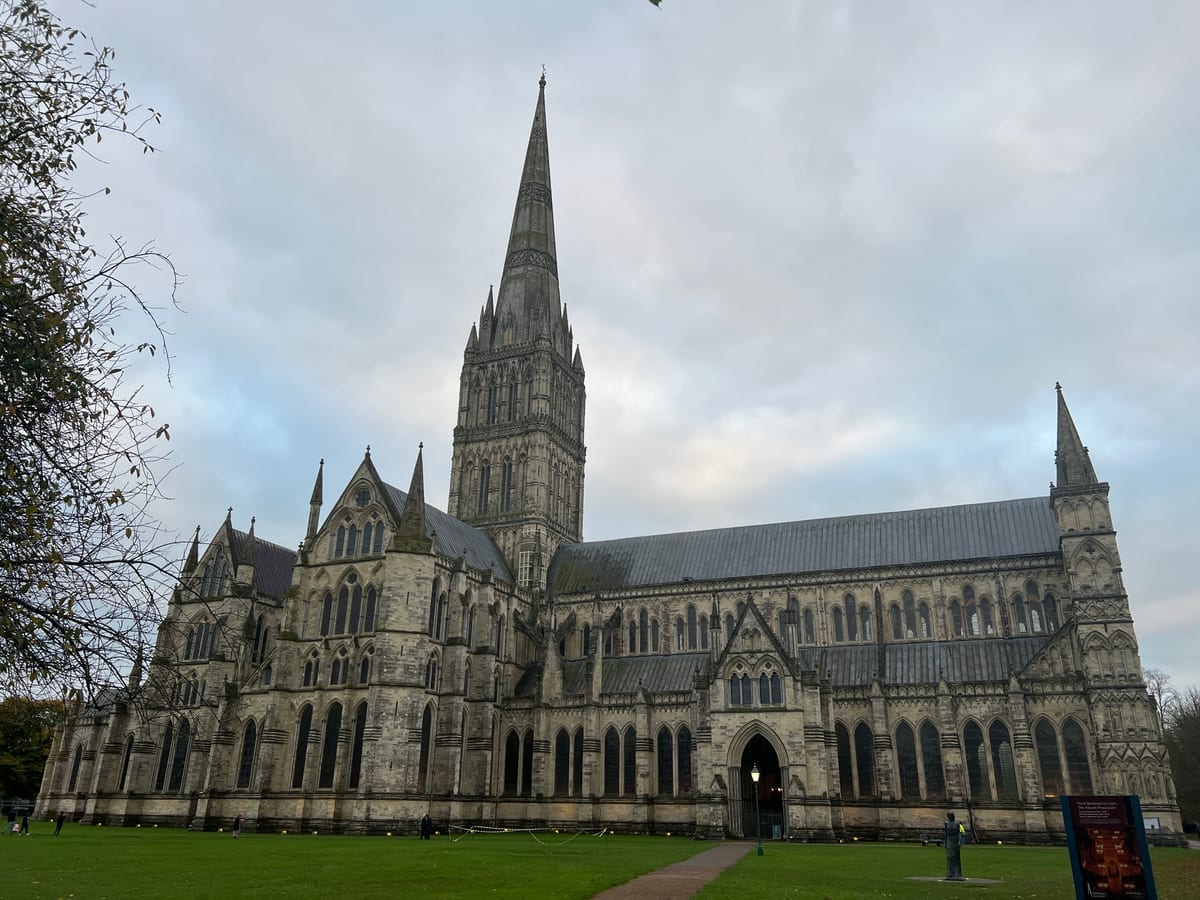
Mompesson House is a historic home located in the center of Salisbury, right inside the Salisbury Cathedral Close. Tucked into a separate grass square to the right of the main entrance to the close, The Queen Anne Townhouse features a gorgeous interior and wooden staircase, former stables, an intimate back garden, and all set before a stunning view of the tallest Cathedral in England.
Though originally a family home, after a rich history of ownership and change the house is now a Grade I listed property and has been owned by the National Trust since 1975.
The History of Mompesson House
Thomas Mompesson was a wealthy and prominent man from Wiltshire, and in 1635 he leased land in the Cathedral Close and built a home. It featured ten rooms and a main hall, but despite its grandeur, this house would be rebuilt less than 50 years later in the 1670s by his son Sir Thomas Mompesson. Sir Thomas was at various points an MP for Salisbury, Old Sarum, and Wiltshire. In fact, Old Sarum was a so-called ‘Rotten Borough’, which was a type of government corruption in which uninhabited locations ‘elected’ parliamentary members. Alongside his role in parliament Sir Thomas decided to rebuild the house and add stables to the property.
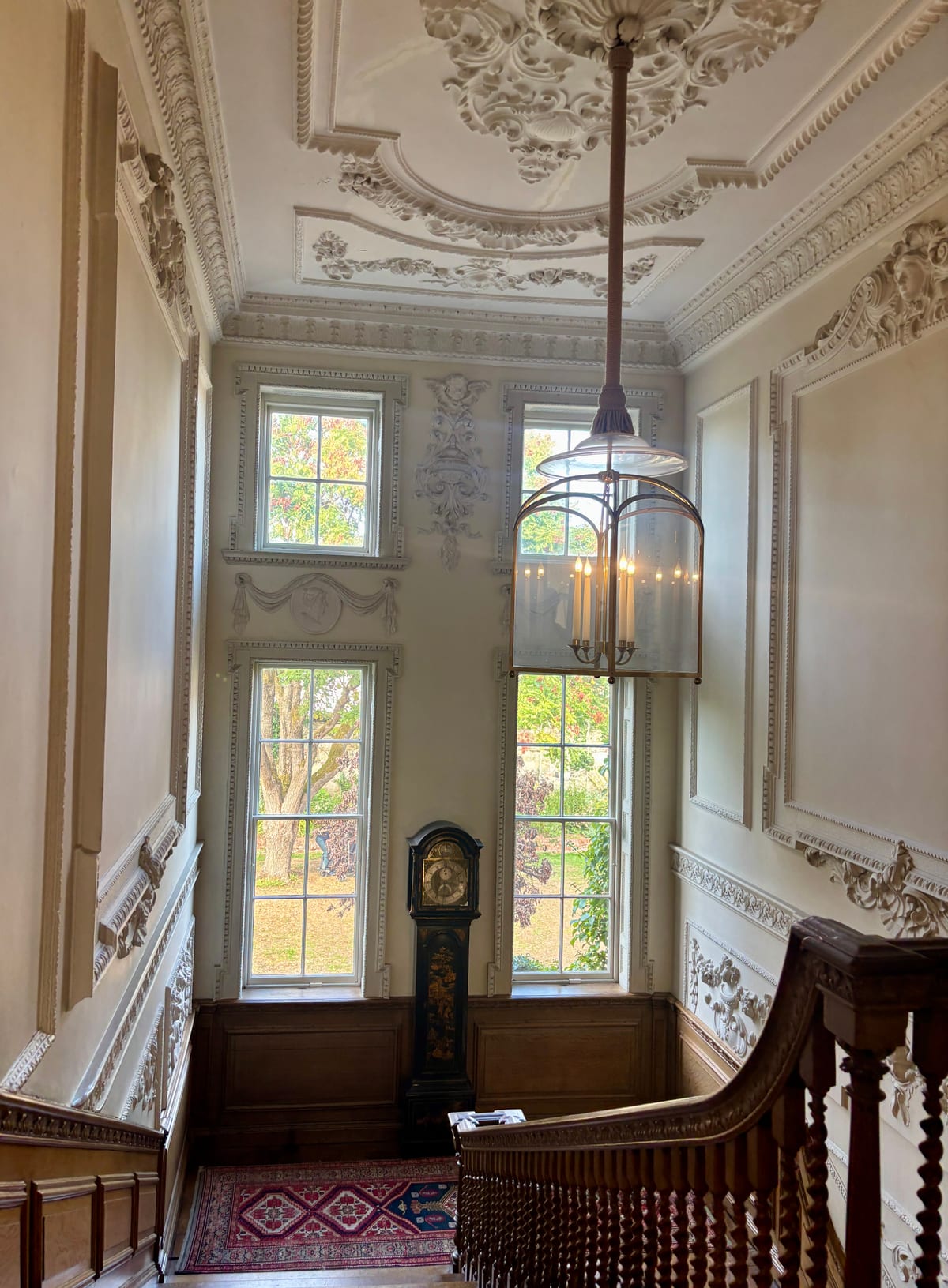
Charles Mompesson (Son of Sir Thomas) further renovated the property, with the most notable change being refronting the house with a stone facade. By 1701 the house was finished, and Charles lived there with his wife Elizabeth Longueville until his death. In the remaining years of her life, Elizabeth’s brother (also Charles) moved into the house and together they further changed the property, adding aspects to the interior, including the current staircase, detailed plasterwork, and brick.
After Charles died, there was some conflict with his will when he attempted to pass the house on. There are contradicting reports of who exactly he meant; whilst it’s certain he tried to give it to a man named John Clark, some sources claim this was his illegitimate son, with others stating this was his steward’s nephew. In either case, Elizabeth rejected this and adjusted her will to only allow Clark access to reside in the house during his lifetime. It was decreed to be passed to Thomas Hayter upon Clark’s death, although some reports suggest he moved out before this, taking with him a large quantity of the house’s furnishings.
The next family to live in Mompesson house was composed of a widow, Ann Portman (formerly Wyndham), and her three daughters. Ann’s son Edward Berkely Portman married in 1798 and decided to move into his family's country house, prompting his mother and sisters to move away.
Ann’s three daughters were named Ann Mary, Henrietta, and Wyndham. They lived in Mompesson House for several decades until their deaths. From there the house was sold to George Townsend (possibly through Henrietta’s son). The Townsends were the final family to reside in the house, and in 1946, after nearly a century, the house was transferred to Salisbury Cathedral in part of a deal which repurposed several buildings to accommodate the increasingly overcrowded Cathedral School. This deal gave the school access to use the Bishop’s Palace, and they in turn assigned Mompesson House as the new residence for the Bishop of Salisbury.
This use of the house was short-lived and it was sold in 1952 to Denis Martineau, an architect from London who decided the house would be given to the National Trust upon his death. He kept his residence in London and lived part-time in Mompesson House, dedicating substantial effort to repairing and renovating the house. Additionally, he allowed tours twice a week until 1975, when he died unexpectedly. Following his death, the National Trust carried out some conservation work before opening it to the public in 1977.
2026 Restoration
The North-East bedroom was reopened in 2026 after restoration to the ceiling, flooring, and the 18thc. fireplace. The room had undergone many changes over the centuries, at one point even becoming a bathroom. On the first floor, this newly opened room adds another piece of detail to Mompesson House and shows the view that residents had of the back garden. Information on the conservation work that had to take place can be found here, or on the house tour!
Regular window maintenance also took place this year, touching up sore spots and doing minor repairs.
Filming at Mompesson House
Mompesson House was a filming location for Sense and Sensibility (1995) starring Emma Thompson, Alan Rickman, Kate Winslet, and Hugh Grant. The movie won an Oscar for best adapted screenplay and was filmed across Devon and Wiltshire.
The new film Sense and Sensibility starring Daisy Edgard Jones and Esme Creed-Miles was filmed two hours away in London, in Rainham House.
What to do at Mompesson House?
House
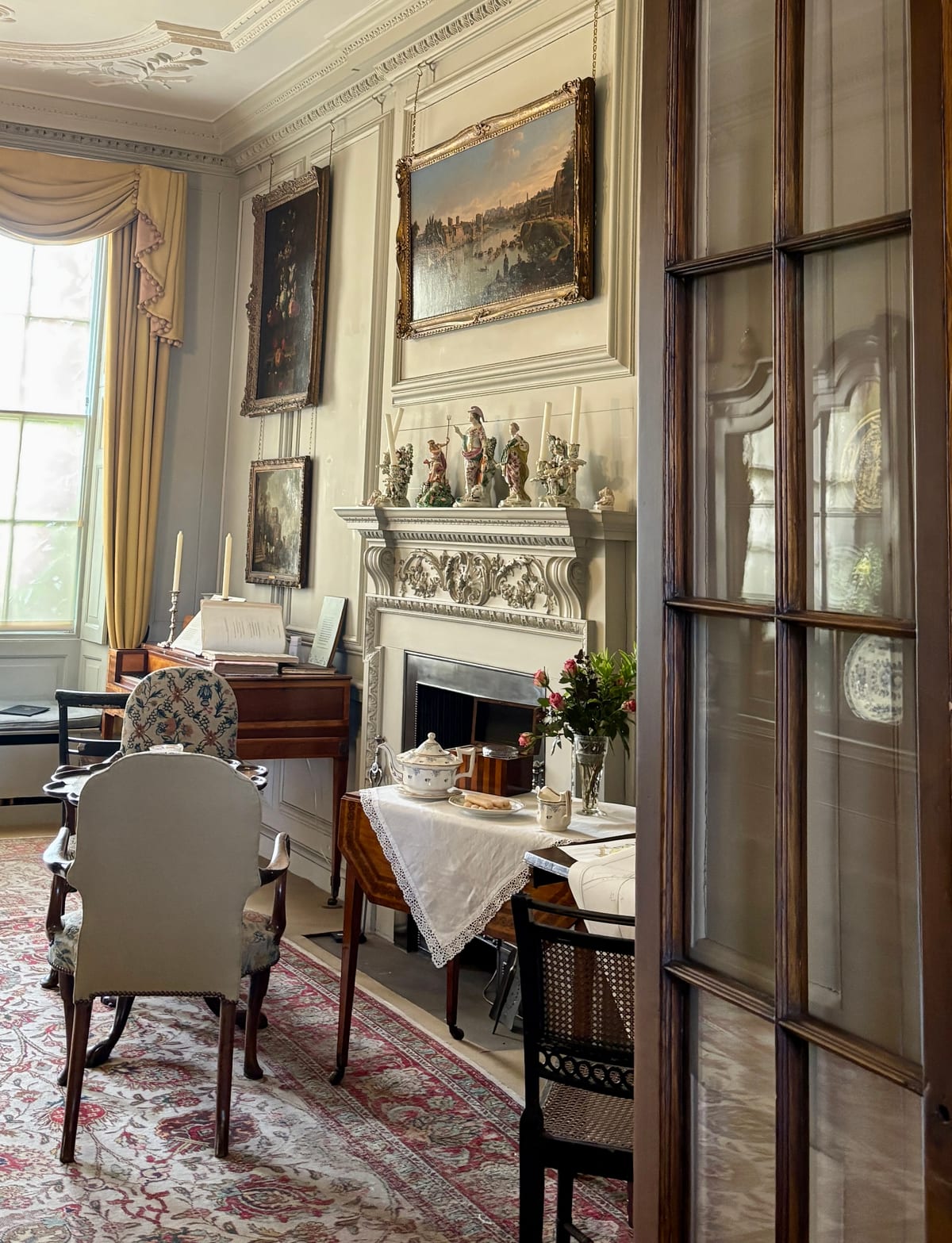
The House is visitable via a self-guided tour. There are rooms open on the ground floor including an elegant dining room, sitting room, library, and entrance hall. Up the grand staircase to the first floor, there are multiple bedrooms open for viewing, each containing different infographics with details about the house, the purpose and use of the rooms, and the changes or conservation efforts undertaken by the various residents.
Garden
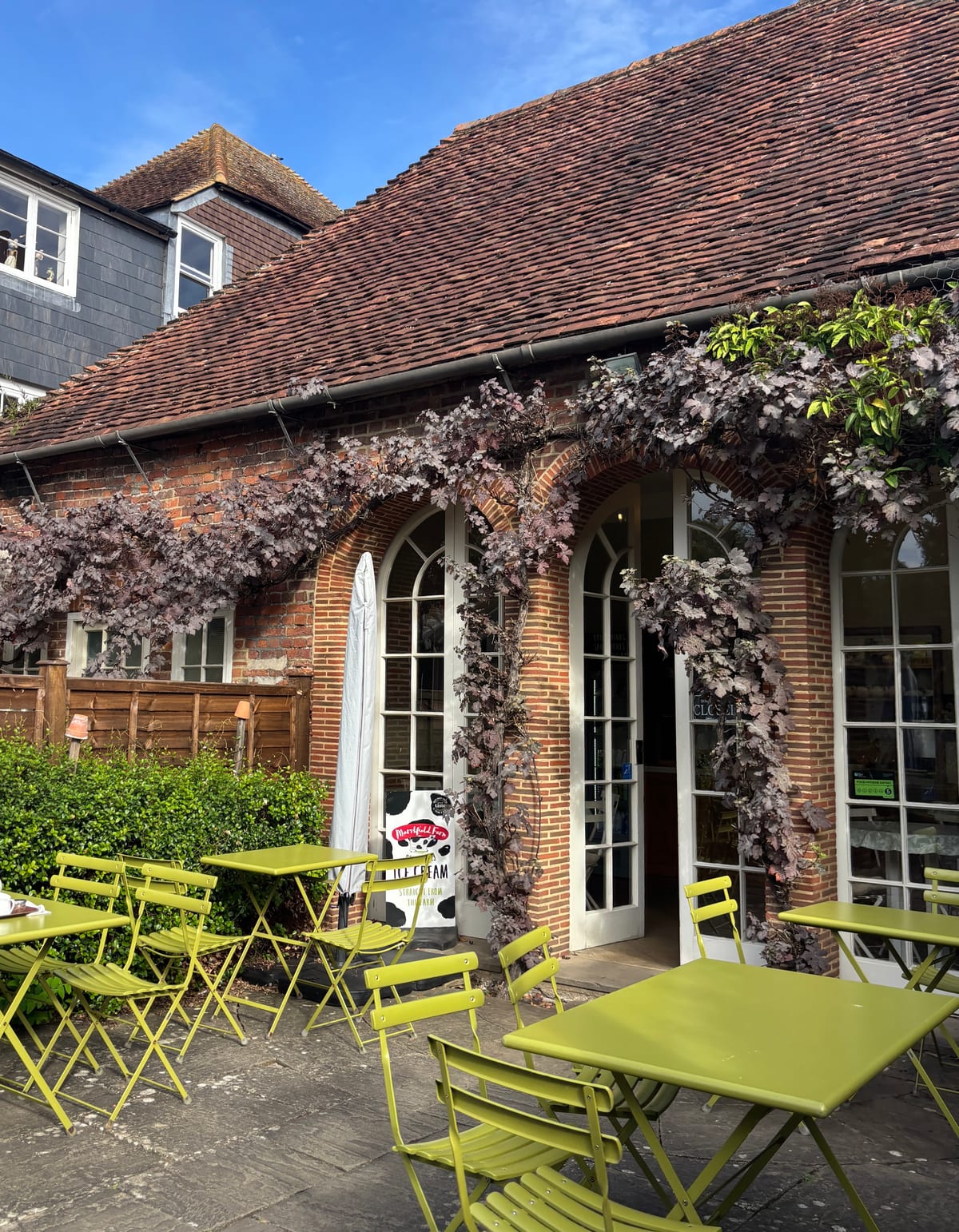
The garden is small and intimate. There is a pergola which is especially beautiful when the flowers are in full bloom. The gardens are unavoidable as it is where traffic flows after the house, leading out to the former stables and offering opportunities to stop by the second-hand bookshop, tearooms, or exit the estate.
Collections
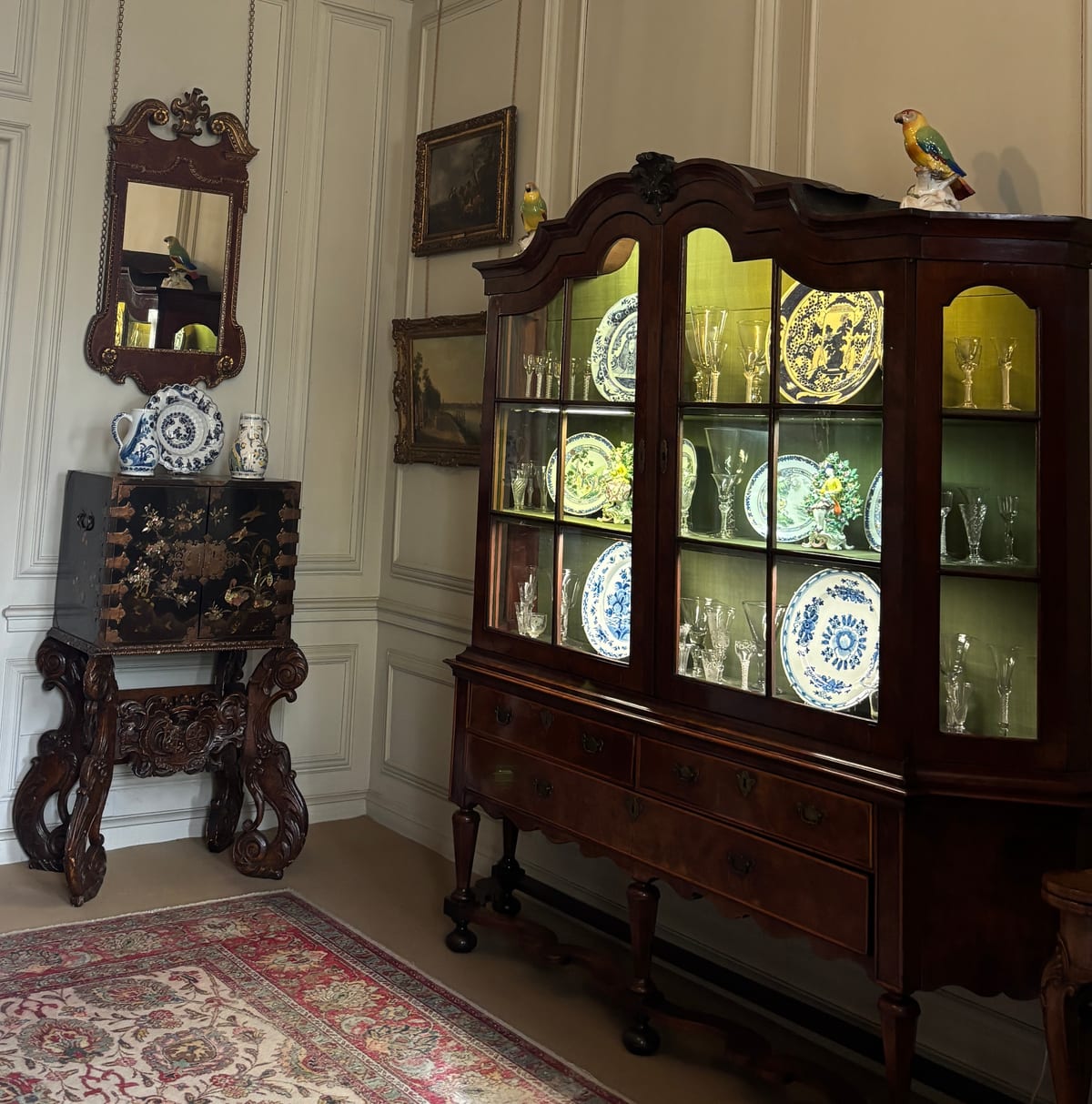
Mompesson House is home to an impressive array of collected items. There are historical objects from furniture to cookware, as well as a specific collection of 18thc. English drinking glasses. The various rooms hold different objects, all interesting to study. Volunteers in each room can help answer questions about the room itself or its contents.
The National Trust has an online database that documents its collections-the Mompesson House collection can be found here! It’s important to remember these indexes can change and are often being adjusted to be kept up to date.
How to Reach Mompesson House
Mompesson House is located inside of the Cathedral Close. The close and Mompesson House itself are a quick walk from Salisbury train station, at just over half a mile. Salisbury Railway Station is easily reached from London and other regions of England. Our article on Salisbury Cathedral details the best travel methods to reach Salisbury, linked below.
Complete Guide to Salisbury Cathedral
The history of Salisbury Cathedral, how to see the Magna Carta, the World's Oldest Working Clock, where to eat, Salisbury Cathedral tours, and more!