About St Thomas' Church
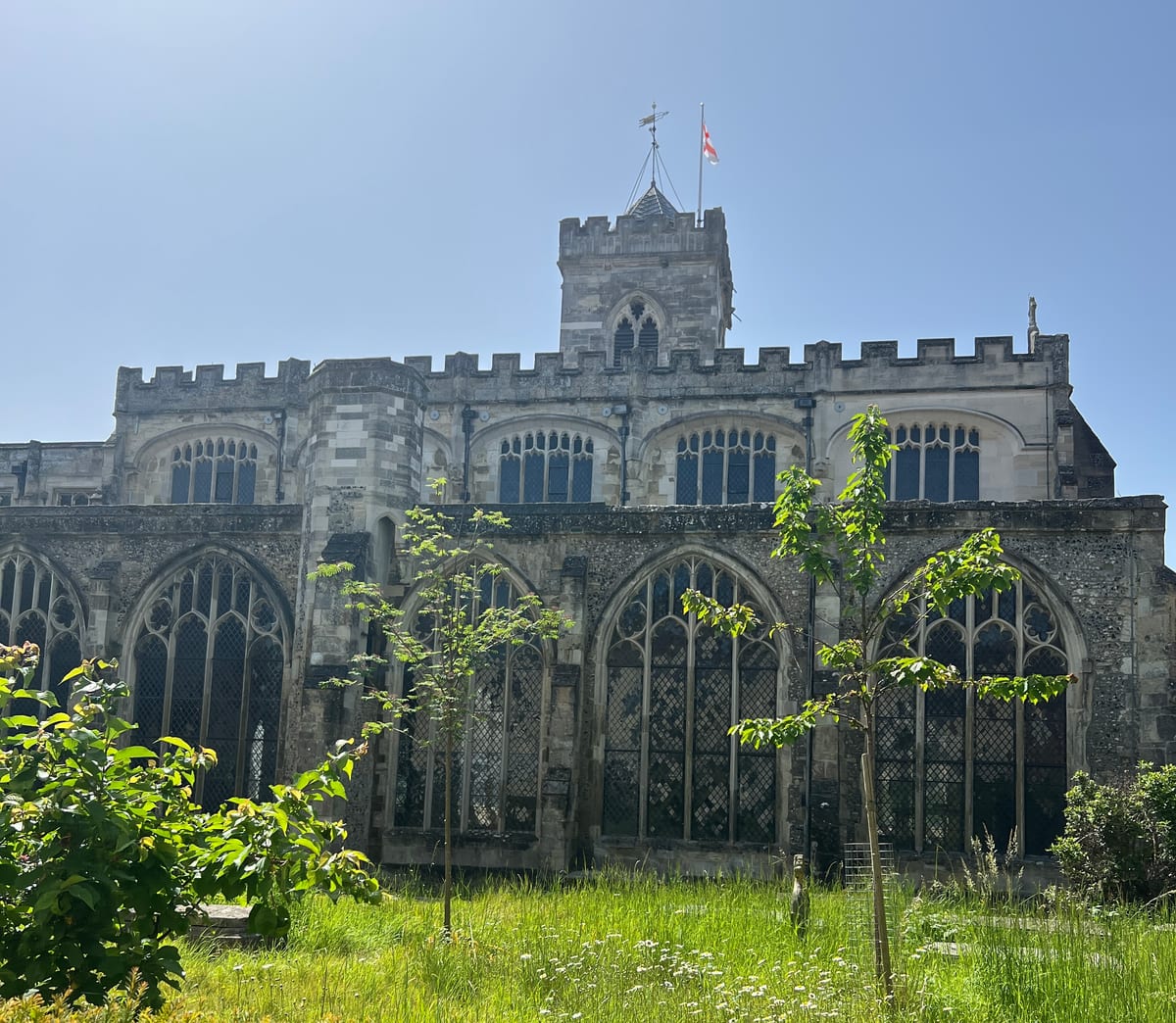
St. Thomas’ Church is a medieval church located in the center of Salisbury, just a few minutes walk away from the cathedral. At over 800 years old, it is a piece of living history where a vibrant Anglican community still practices. The church itself is an amazing site, and inside it are several hidden treasures, such as a small café, a children's play area, a Tricephalous Trinity (which we'll get into later!), as well as the Doom Painting that made it famous.
The church is open from 9:00-17:00 for visitors, though it can be closed for events or services. There is a free online guide accessible via the St. Thomas’ Church website, available here. The online guide gives descriptions of various objects, some of the history of the church, and details about how it's changed over the centuries. There are also physical pamphlets to guide you through the church that are available on site for purchase.
Brief History of St. Thomas' Church
St. Thomas' Church originates from 1219, where it began as a small chapel, believed to have been used by the masons building the Salisbury Cathedral. Over several years the building was expanded, and by 1246 it had established its own parish. Over the next few centuries there were renovations, additions, scrapped spire plans, a new roof, and several changes that transformed the small wooden chapel into the prominent church it is today.
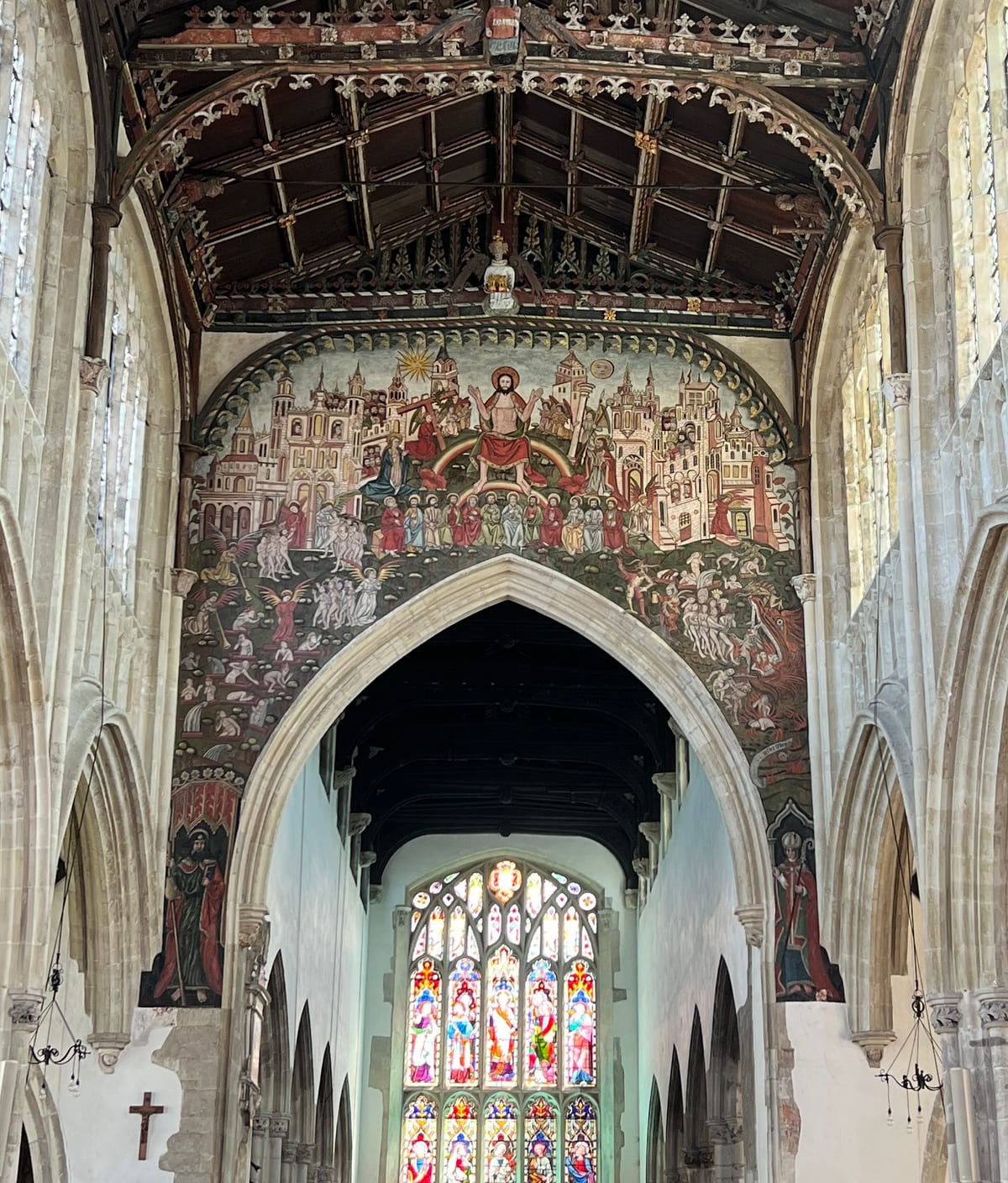
What is a Doom Painting
A doom painting is an English term for a large church mural that depicts the Last Judgement. This is normally painted above an arch or on the west wall; it was used to communicate the message of judgement and hell to the largely illiterate population of the time.
While the layouts may vary, the general structure of doom paintings remain the same: Jesus Christ is shown in Judgement, with the Twelve Apostles flanking Jesus. The paintings are split equally, with heaven on the right, and hell on the left.
History of the Doom Painting at St. Thomas'
The painting is believed to have been created in 1470. In 1593, the painting was whitewashed over during the Reformation. This was a common practice in the time as the newly embraced Protestant beliefs forbid iconography and depictions of religious art, which has made the survival of this type of art particularly rare in England. The painting was rediscovered in 1881, where it was then restored in part. It underwent further restoration in 2019, with the final stage consisting of a coat of vanish.
Today, it is a preserved piece of art that captures the religious fervour of the period. It is one of the most complete examples of a such a painting in the country.
What is a Tricephalous Trinity
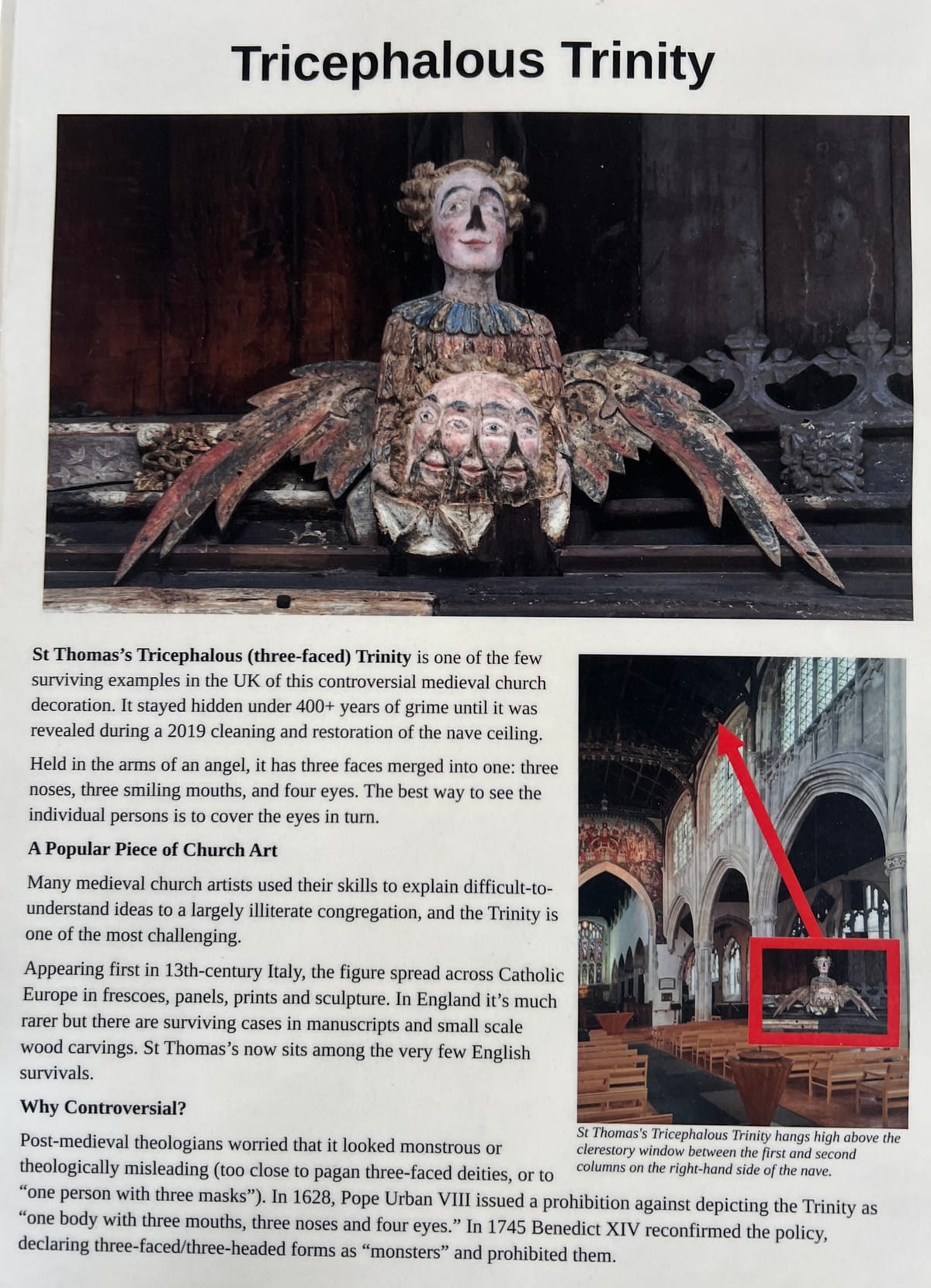
A Tricephalous Trinity is a representation of the holy trinity with three heads on one body. These were used to explain the difficult concept of the Trinity to the common, mostly illiterate, people of the time. They're a very rare find in England, with St Thomas' being one of the very few surviving examples.
The Tricephalous Trinity at St Thomas' Church
This example was hidden for over 400 years, covered by grime. It was revealed during a 2019 cleaning. You can find it between the first and second columns on the right-hand side of the nave!
Inside the church is a useful guide to their Tricephalous Trinity, here is a copy of it: